
How to Choose and Maintain Hydraulic Oil for Hydraulic Container Tilter
release time:
2026-05-18
Proper selection and maintenance of hydraulic oil are critical for hydraulic container tilters and flippers
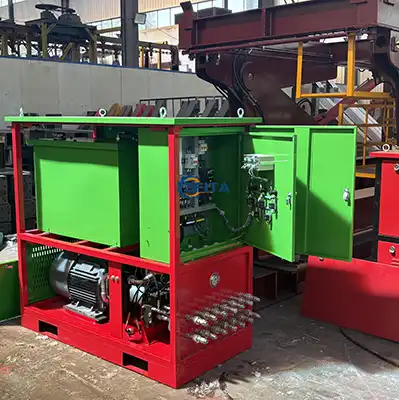
In the busy port terminals around the world, hydraulic container tilter and hydraulic container flipper are indispensable heavy-duty equipment that drive the efficient operation of container handling. These machines rely entirely on their hydraulic systems to complete heavy-load flipping, tilting, and positioning tasks, making hydraulic oil the lifeblood that ensures their stable and reliable performance. Choosing the right hydraulic oil and implementing scientific maintenance practices are not only critical to extending the service life of hydraulic container tilter and hydraulic container flipper, but also directly affect port operational efficiency, safety, and maintenance costs. This article will comprehensively elaborate on the key principles of hydraulic oil selection and daily maintenance for hydraulic container tilter, providing practical and actionable guidance for port equipment managers, maintenance technicians, and operators.
Hydraulic container tilter and hydraulic container flipper operate in harsh port environments, often facing high pressure, heavy load, frequent start-stop cycles, and exposure to humidity, salt spray, and extreme temperature fluctuations. Unlike ordinary hydraulic equipment, the hydraulic systems of hydraulic container tilter and hydraulic container flipper must withstand continuous impact loads during container turnover, which places higher requirements on the performance of hydraulic oil. A substandard or improperly maintained hydraulic oil can lead to accelerated wear of hydraulic components, system leaks, frequent failures, and even serious safety accidents, resulting in costly downtime and maintenance expenses. Therefore, mastering the correct method of hydraulic oil selection and maintenance is essential for the long-term stable operation of hydraulic container tilter and hydraulic container flipper.
First and foremost, selecting the appropriate type of hydraulic oil is the foundation for ensuring the normal operation of hydraulic container tilter and hydraulic container flipper. Given the high-pressure (usually 16–25 MPa), heavy-load, and impact-prone working conditions of hydraulic container tilter, the hydraulic oil must possess excellent anti-wear, anti-oxidation, anti-emulsification, and anti-foaming properties. According to national standards (GB 1118.1) and industry best practices, L-HM anti-wear hydraulic oil is the preferred choice for hydraulic container tilter and hydraulic container flipper. This type of hydraulic oil is formulated with advanced anti-wear additives that can form a protective film on the surface of hydraulic components, effectively resisting extreme pressure and wear, reducing friction between plunger pumps, valves, cylinders, and other key parts, and thus extending the service life of hydraulic container tilter and hydraulic container flipper.
For hydraulic container tilter and hydraulic container flipper operating in different climatic regions, the viscosity grade of hydraulic oil must be selected based on the local ambient temperature to ensure optimal fluidity and lubrication performance. Viscosity is a key indicator that affects the efficiency of the hydraulic system: too high viscosity will increase energy consumption and startup resistance, while too low viscosity will lead to insufficient lubrication and increased internal leakage. The following table clearly summarizes the recommended viscosity grades for hydraulic container tilter and hydraulic container flipper under different ambient temperatures, helping you make quick and accurate selections:
Ambient Temperature Range | Recommended Hydraulic Oil Viscosity (ISO VG) | Applicable Regions/Scenarios | Key Advantages for Hydraulic Container Tilter & Hydraulic Container Flipper |
|---|---|---|---|
0–40℃ | 46 (L-HM) | Temperate regions (e.g., Yangtze River Basin, most coastal ports in moderate climates) | Balances cold startup fluidity and high-temperature lubrication stability, perfectly adapting to daily working conditions of hydraulic container tilter and hydraulic container flipper |
20–50℃ | 68 (L-HM) | Southern tropical regions, areas with long-term sunlight exposure (e.g., southern coastal ports) | High-temperature viscosity stability, reducing internal leakage and component wear of hydraulic container tilter caused by viscosity reduction |
-20–10℃ | 32 (L-HV) | Northern winter, cold regions (e.g., northern ports in winter) | Maintains good fluidity at low temperatures, avoiding startup difficulties and pump wear of hydraulic container flipper due to oil solidification |
This table provides a clear reference for the daily selection of hydraulic oil for hydraulic container tilter and hydraulic container flipper. By matching the viscosity grade with the ambient temperature, you can ensure that the hydraulic system of the equipment maintains optimal performance in different environments, reducing the risk of failures caused by improper viscosity selection.
When selecting hydraulic oil for hydraulic container tilter and hydraulic container flipper, it is also necessary to strictly check key performance indicators to ensure compliance with operational requirements. The viscosity index (VI) should be no less than 95; a higher viscosity index means the hydraulic oil’s viscosity changes less with temperature, ensuring stable performance of the hydraulic system of hydraulic container tilter in both high and low temperature environments. The flash point should be no less than 180℃ to prevent fire accidents in the high-temperature operation environment of ports, where hydraulic container tilter often works continuously for long hours. The pour point should be 5–10℃ lower than the minimum ambient temperature to avoid oil solidification in cold weather, which would paralyze the hydraulic system of hydraulic container tilter. In addition, the cleanliness of hydraulic oil is particularly critical for hydraulic container tilter and hydraulic container flipper; the oil must meet NAS 8 level or ISO 4406 18/15 standards to strictly control impurities, which can cause blockage of hydraulic pipelines, wear of precision components, and even system failure. The water content should be ≤0.1% to prevent emulsification, cavitation, and corrosion of metal components in the hydraulic system of hydraulic container tilter.
In terms of brand selection, hydraulic container tilter and hydraulic container flipper require hydraulic oil with reliable quality and stable performance. International brands such as Shell Tellus S2 M, Mobil DTE 25, and Castrol Hyspin AWH have mature formulations and excellent performance, which are suitable for hydraulic container tilter operating under high-intensity conditions. Domestic brands such as Great Wall Zhuoli L-HM and Kunlun Tiangong L-HM offer high cost performance, with quality meeting industry standards, and are widely used in domestic port hydraulic container tilter and hydraulic container flipper. It is important to note that if the hydraulic container tilter is equipped with high-pressure plunger pumps from well-known brands such as Rexroth and Parker, ashless L-HM hydraulic oil should be preferred to avoid zinc-containing additives in ordinary hydraulic oil corroding the bronze components of the pump. At the same time, it is strictly prohibited to mix hydraulic oils of different brands, models, or additive systems, and it is forbidden to replace L-HM anti-wear hydraulic oil with HL ordinary hydraulic oil, gear oil, or engine oil. Such improper replacement will seriously damage the hydraulic components of hydraulic container tilter and hydraulic container flipper, leading to premature failure and increased maintenance costs.
Choosing the right hydraulic oil is only the first step; scientific daily maintenance is the key to ensuring the long-term stable operation of hydraulic container tilter and hydraulic container flipper. The core of hydraulic oil maintenance is to keep the oil clean, control the oil temperature within a reasonable range, and replace the oil and filter elements regularly. Neglecting any of these links can lead to a significant reduction in the service life of hydraulic oil and the hydraulic system of hydraulic container tilter.
Daily inspection before startup is an essential part of maintaining hydraulic container tilter and hydraulic container flipper. Before starting the hydraulic container tilter each day, operators should first check the oil level after the machine is shut down and the oil has returned to the tank. The oil level should be maintained between 1/2 and 2/3 of the oil level gauge; too low an oil level will cause the hydraulic pump to suck in air, leading to cavitation, noise, and accelerated pump wear, while too high an oil level will easily cause foaming and overheating of the hydraulic oil. At the same time, operators should observe the appearance of the hydraulic oil: normal hydraulic oil is light yellow and transparent; if it turns black, it indicates oxidation or severe pollution; if it turns milky white, it indicates water emulsification; if foaming is serious, it indicates air intake or oil deterioration. In case of any of these abnormal situations, the hydraulic container tilter should be shut down immediately for inspection and treatment to avoid further damage to the hydraulic system.
Temperature control during operation is another critical point in hydraulic oil maintenance for hydraulic container tilter and hydraulic container flipper. The ideal operating temperature of hydraulic oil for hydraulic container tilter is 35–55℃, and the allowable temperature range is 30–60℃. If the oil temperature exceeds 65℃, the hydraulic container tilter should be shut down immediately to check the causes, which may include a blocked cooler, equipment overload, insufficient oil, or pump failure. High oil temperature will accelerate the oxidation of hydraulic oil, aging of seals, reduction of viscosity, increase of internal leakage, and even halve the service life of hydraulic components. In low-temperature environments (below 10℃), the hydraulic container tilter should be preheated with no load until the oil temperature reaches ≥30℃ before carrying out load-bearing operations. This preheating process can ensure that the hydraulic oil has sufficient fluidity, avoiding excessive wear of the hydraulic pump and other components due to insufficient lubrication.
Preventing pollution is the core of hydraulic oil maintenance for hydraulic container tilter and hydraulic container flipper, as 70% of hydraulic system failures are caused by oil pollution. When adding new oil to the hydraulic container tilter, the oil must be filtered through a 10μm fine filter to remove impurities in the new oil. Before filling, the oil tank should be thoroughly cleaned to remove residual old oil, sediment, and debris; cotton yarn should be forbidden during cleaning to avoid leaving fibers that can block the hydraulic pipeline. The filter elements of the hydraulic container tilter should be replaced regularly: the suction filter element should be cleaned or replaced every 200 hours or 3 months, and the return oil/high-pressure filter element should be replaced every 500 hours or 6 months. If the pressure difference alarm of the filter is triggered, the filter element should be replaced immediately to prevent unfiltered oil from entering the hydraulic system. The ventilation cap of the oil tank should be kept unobstructed, and its built-in filter element should be checked and replaced regularly to prevent dust, rainwater, and other impurities from entering the tank. In the port’s humid and salt-spray environment, the flanges, joints, and seals of the hydraulic container tilter and hydraulic container flipper should be inspected regularly to prevent oil leakage and water inflow, which can cause emulsification of hydraulic oil and corrosion of components.
The oil change cycle of hydraulic container tilter and hydraulic container flipper should be strictly implemented according to the operation time and working conditions. To help you better grasp the oil change standards, the following table summarizes the specific oil change cycles and related requirements for hydraulic container tilter and hydraulic container flipper:
Equipment Status/Working Environment | Oil Change Cycle | Key Notes for Hydraulic Container Tilter & Hydraulic Container Flipper |
|---|---|---|
New hydraulic container tilter/hydraulic container flipper or after major maintenance | 200 hours of operation or 1 year (whichever comes first) | New machines produce metal debris during running-in, which can contaminate hydraulic oil; timely oil change protects hydraulic components of hydraulic container tilter |
Normal working conditions (moderate load, normal temperature and humidity) | 2000 hours or 1–2 years (whichever comes first) | Regular oil change ensures stable performance of hydraulic oil, extending the service life of hydraulic container tilter and hydraulic container flipper |
Harsh port environments (heavy load, high temperature, high humidity, salt spray) | 1000–1500 hours (shortened cycle) | Harsh environments accelerate hydraulic oil deterioration; shortening the cycle prevents component wear of hydraulic container tilter |
Abnormal hydraulic oil conditions | Change oil in advance | Change oil immediately if hydraulic oil turns black, emulsifies, has excessive impurities, or acid value exceeds 2.0 mgKOH/g |
When changing the oil, the old oil should be drained when the machine is shut down and the oil is warm, as this allows suspended impurities to be drained together with the old oil. After draining the old oil, the oil tank and filter should be thoroughly cleaned, the filter element should be replaced, and new oil of the same model should be added to the specified oil level. Finally, the hydraulic system should be ventilated and run under no load for 5–10 minutes to ensure that the new oil fills the entire system and air is completely exhausted.
Inspection Item | Inspection Cycle | Early Warning Threshold | Impact on Hydraulic Container Tilter & Hydraulic Container Flipper |
|---|---|---|---|
Viscosity | 500–1000 hours | Change exceeding ±10% | Affects lubrication and fluidity, leading to increased wear of hydraulic components in hydraulic container tilter |
Acid Value | 500–1000 hours | Exceeds 1.5 mgKOH/g | Accelerates oxidation of hydraulic oil and corrosion of metal components in hydraulic container flipper |
Water Content | 500–1000 hours | Exceeds 0.2% | Causes hydraulic oil emulsification, cavitation, and corrosion of hydraulic system components of hydraulic container tilter |
Pollution Degree (Particle Count) | 500–1000 hours | Exceeds ISO 20/17 | Blocks hydraulic pipelines and wears precision components of hydraulic container tilter and hydraulic container flipper |
These indicators can accurately reflect the quality of the hydraulic oil and the wear status of hydraulic components. When the early warning threshold is reached, corresponding measures should be taken in time, such as changing the oil, replacing the filter element, or inspecting the hydraulic system for leaks, to ensure the stable operation of hydraulic container tilter and hydraulic container flipper.
In addition to the above points, for hydraulic container tilter and hydraulic container flipper operating in port environments, special attention should be paid to the impact of salt spray and humidity. It is recommended to select L-HM hydraulic oil with strong anti-emulsification and anti-rust properties, and regularly drain the water accumulated at the bottom of the oil tank to prevent water from mixing into the hydraulic oil. The seals of the hydraulic container tilter should be made of fluorine rubber, which has good resistance to salt spray and aging, reducing the risk of oil leakage and water inflow. For hydraulic container tilter and hydraulic container flipper working in areas with large temperature differences between day and night, hydraulic oil with a high viscosity index (VI≥120) should be selected to reduce viscosity fluctuations caused by temperature changes, ensuring stable operation of the hydraulic system.
label:



Click to Chat.
Im online now.