Container Loading & Unloading from Truck
Need to place a shipping container on the ground—or lift it back onto a truck—without arranging a mobile crane for every transfer? ZFITA helps evaluate four-corner hydraulic container lifting jacks against cranes, reach stackers and other container-handling methods.
Which Container Transfer Method Fits Your Site?
Removing a container from a truck is not the same as moving a container across a yard. The right equipment depends on the load, available space, frequency of operation and whether the container must be stacked or transported after lifting.
Unload the Container from a Chassis
Raise a compatible container to a verified clearance, remove the truck chassis, then lower the container at a designated ground-level position.
Return the Container to a Truck
Lift a ground-positioned container so a suitable chassis can be placed underneath, then lower and secure it for transport.
Move or Stack Containers Elsewhere
If containers must travel around the yard or be stacked, use equipment designed for that task, such as a straddle carrier or reach stacker.
Container Lifting Jacks vs. Cranes, Reach Stackers & Straddle Carriers
No single method is best for every project. The four-corner jack system is especially relevant for stationary transfers where frequent container stacking or loaded travel is not required.
| Equipment | Best-Suited Task | Main Considerations | When to Choose |
|---|---|---|---|
| Four-Corner Hydraulic Container Lifting Jacks | Lift a compatible container from truck to ground, and back onto a chassis | Four lifting positions; suitable bearing surface; synchronization; rated load; verified chassis clearance; time to position jacks | Stationary, low-to-moderate-frequency transfers without yard movement |
| Mobile Crane / Truck-Mounted Crane | Lift and place a container within the machine's rated working range | Crane load chart, rigging, ground and outrigger conditions, radius, personnel and scheduling | Occasional lifting or projects requiring versatile positioning |
| Reach Stacker | Frequent lifting, container transport and stacking | Machine access, ground pavement, maneuvering room, staffing and capital/operating cost | Busy depots and logistics yards handling many containers |
| Container Straddle Carrier | Pick up containers and move them to another location within a yard | Travel route, turning radius, surface capacity, container weight and stacking capability | On-site container transfer and yard movement |
| Heavy-Duty Forklift with Approved Attachment | Specific approved container-handling tasks | Machine ratings, attachment certification and container lifting points; not a substitute for approved lifting design | Only where equipment and container are explicitly compatible |
ZFITA Four-Corner Hydraulic Container Lifting System
ZFITA's portable container lifting jacks use four hydraulic units positioned at the container corners. Synchronized lifting allows the container to be raised vertically so that a compatible truck chassis can be removed or positioned underneath.
Unlike a container tilter, the system does not rotate a container to discharge bulk cargo. Unlike a straddle carrier, it does not drive around the yard with a suspended container.
- Four independent lifting units with coordinated hydraulic operation
- Wireless remote control in the published configuration
- 20ft and 40ft ISO container applications, subject to connections and geometry
- Equipment that can be relocated and set up at an appropriate working position
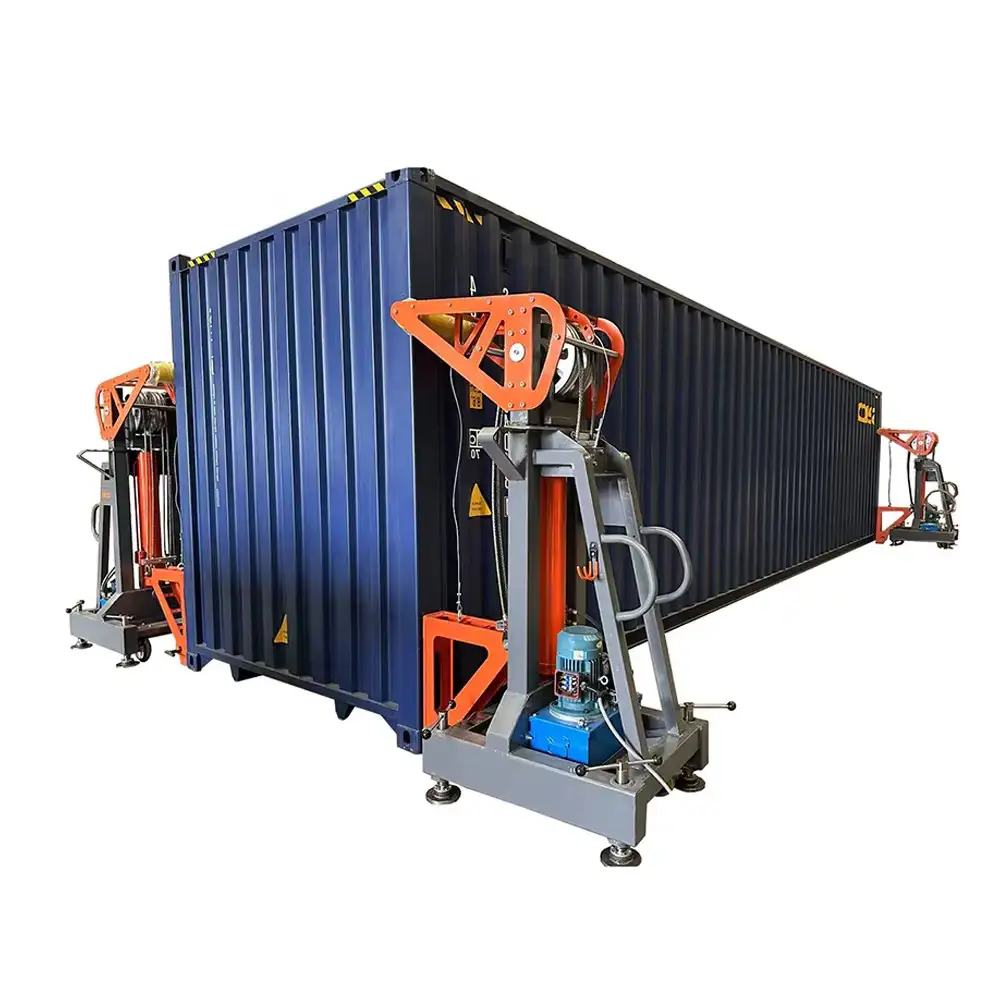 PRODUCT PHOTO 01 · Paste verified lifting jacks photo URL into src=""
How Container Loading & Unloading from a Truck Works
Confirm the Load & Working Site
Check the ISO container, gross weight, center of gravity, corner fittings, trailer height and ground-bearing conditions.
Position & Secure the Four Jacks
Align the lifting units at the designated container lifting points. Complete connection and system checks according to the approved instructions.
Raise the Container
Lift the container in a controlled, synchronized manner until a safe, verified clearance is reached.
Remove or Position the Chassis
Move the truck chassis only after the operating procedure confirms suitable container support and clearance.
Lower & Complete the Transfer
Lower the container onto its designated supports or onto the compatible chassis, then finish securing and disengagement procedures.
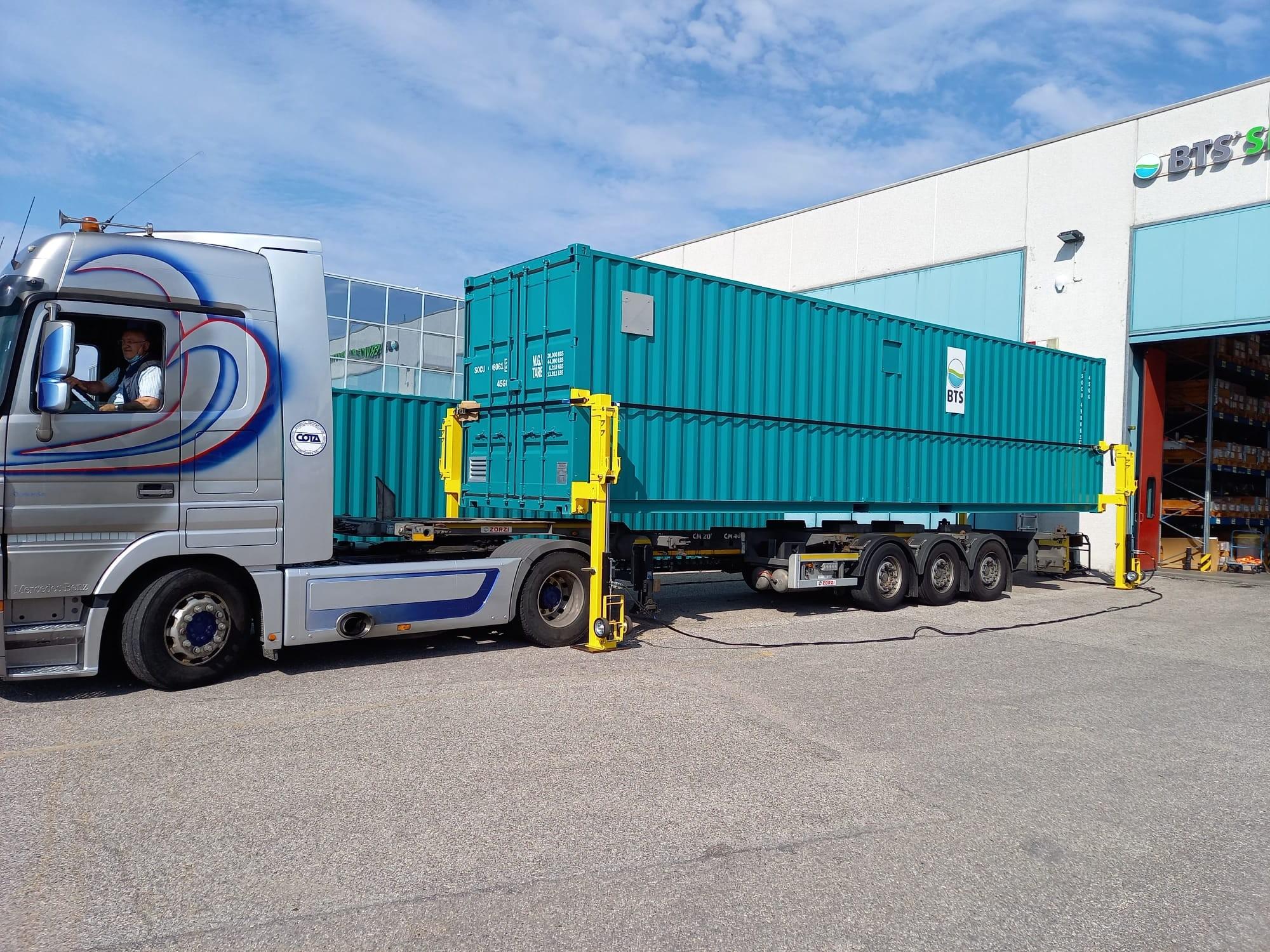 OPERATING PHOTO 02 · Paste actual truck-to-ground transfer photo URL into src=""
When Is a Portable Container Jacking System the Right Choice?
Factory & Warehouse Receiving
Ground-positioning a container for cargo handling when a permanent container crane is not available at the facility.
Occasional Truck Transfers
Periodic delivery and collection where the site does not require continuous container stacking or yard transport.
Industrial Equipment Containers
Compatible containerized equipment can be transferred subject to approved structure, gross weight and center-of-gravity assessment.
High-Frequency Container Stacking
A reach stacker or purpose-built gantry crane may be more suitable for repeated lifting and stacking cycles.
Loaded Container Travel
Use a container straddle carrier or appropriate transport equipment when the container must move across the yard.
Uneven or Weak Ground
Portable does not mean unrestricted ground conditions. Bearing pressure, levelness, support pads and ground stability must be checked.
A Practical Truck-to-Ground Container Transfer Scenario
This is an illustrative use case based on the equipment's operating principle—not a claim about a completed customer installation. Replace it with a verified ZFITA project once the customer details and photos are available.
Customer Requirement
A factory receives full shipping containers on truck chassis but needs the containers positioned on the ground for temporary storage or cargo handling. The site handles containers periodically and does not require container stacking.
ZFITA Equipment Approach
The factory and ZFITA review maximum gross weight, ISO corner lifting compatibility, ground conditions and chassis clearance. If the system is suitable, four synchronized hydraulic jacks lift the container from the chassis for ground-level placement.
What the Customer Needs to Verify
The site must confirm rated lifting loads, the actual lifting geometry, chassis movement clearance, permitted ground bearing and the operating procedure. Any time or cost benefits should be calculated from actual workload and equipment alternatives.
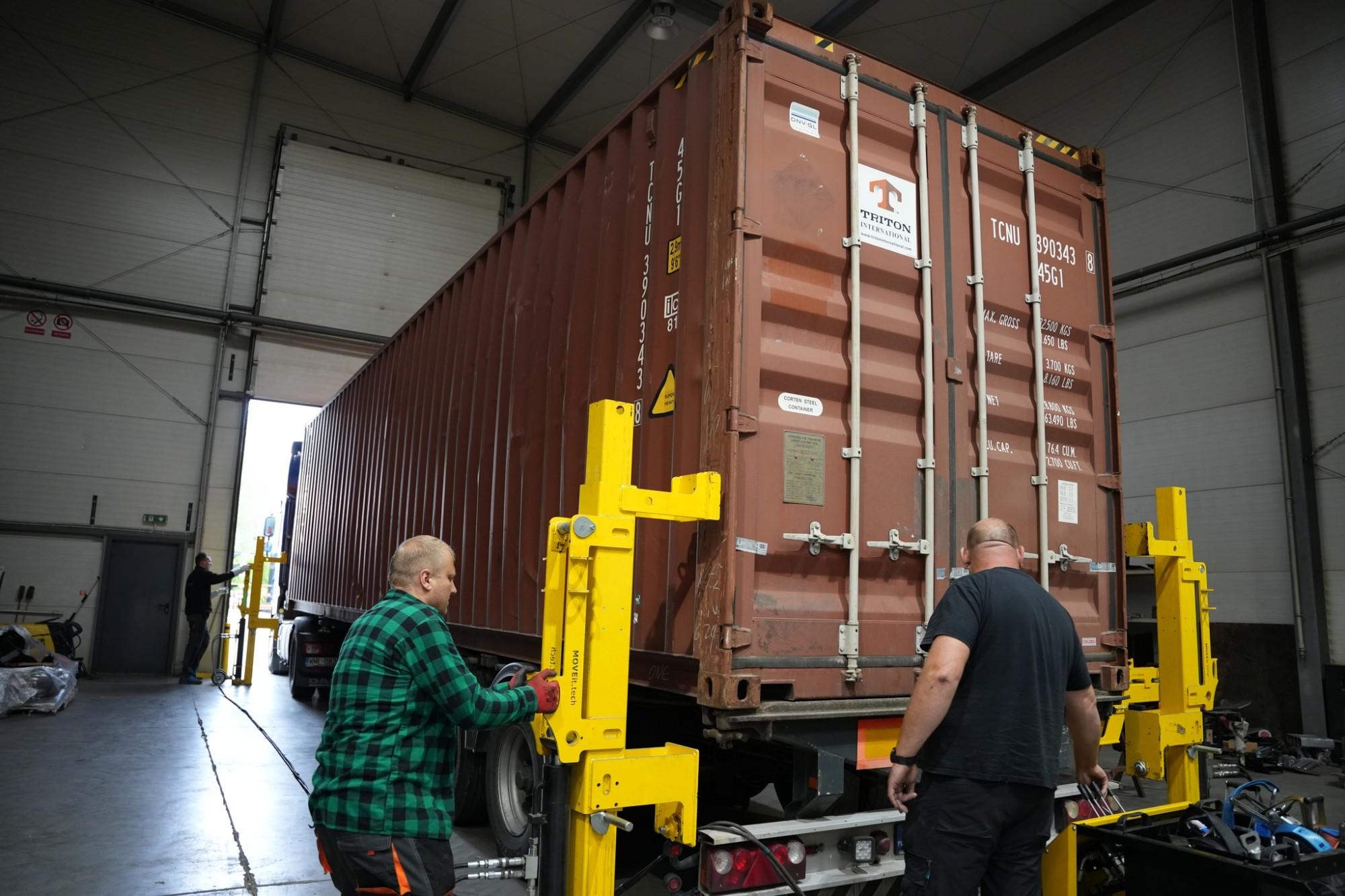 VERIFIED PROJECT PHOTO 03 · Leave blank until a real ZFITA lifting-jacks case is available
What Information Does ZFITA Need for Your Project?
Container & Truck
- 20ft or 40ft; standard or high cube
- Gross container weight including contents
- Container type and corner connection details
- Truck chassis height and wheel/clearance envelope
- Required lift and lowering sequence
Site & Operations
- Ground surface and bearing capacity
- Available operating space and route for the chassis
- Containers transferred per shift / week
- Power supply voltage and frequency
- Destination country and site photos/drawings
This is a container-handling solution page. For complete machinery dimensions and optional configurations, see the Container Lifting Jacks product page. For actual on-site container transportation, see the On-Site Container Transfer Solution.
Container Transfer from Truck FAQ
Can ZFITA container lifting jacks unload a full shipping container from a truck?
They are designed for compatible loaded containers within the verified complete-system rating. The standard listed capacity is 40,000 kg. Container weight distribution, approved lifting points and site conditions must also be evaluated.
Can this system lift a container without a crane?
Yes, a four-corner jack system can perform the stationary lifting and lowering task without a crane, provided the application meets its requirements. Separate equipment may still be needed to position and relocate the individual jack units.
Can the system transport a container across a yard?
No. Container lifting jacks raise and lower a container at a working position. A straddle carrier, reach stacker or another approved transport machine is required for loaded travel across the yard.
Is it always cheaper or faster than a reach stacker?
No. Total cost and throughput depend on operating frequency, setup time, maintenance, staffing, travel and stacking requirements. Repeated high-volume container moves may justify a reach stacker.
Does a portable container jacking system work on uneven ground?
It still needs an engineered, stable, appropriately level and load-bearing support surface. Portability does not remove ground preparation or safety requirements.
What is the difference between container lifting jacks and a container tilter?
Jacks provide vertical lifting between a truck and ground. A container tilter rotates a container to discharge or load bulk materials. These are different equipment applications.
Need to Lift Containers Between Truck & Ground?
Send ZFITA your container size, maximum gross weight, truck chassis details, required ground clearance, working-site conditions and operation frequency. We can help assess whether portable hydraulic container lifting jacks are appropriate.