Project Overview
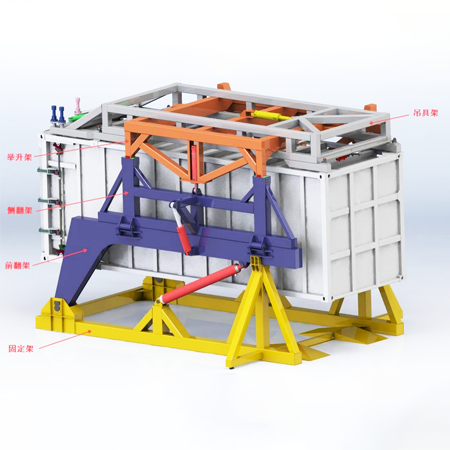
ZFITA supplied a hydraulic rear-tipping truck dumper for Beijing Dabeinong Technology Group for unloading DDGS, a corn-based distillers dried grains with solubles commonly used as an animal feed ingredient.
DDGS presents a particular unloading challenge because of its relatively sticky and cohesive characteristics. When transported in bulk truck bodies, part of the material can adhere strongly to the bottom and side walls of the truck body, making it difficult to discharge completely through conventional gravity unloading.
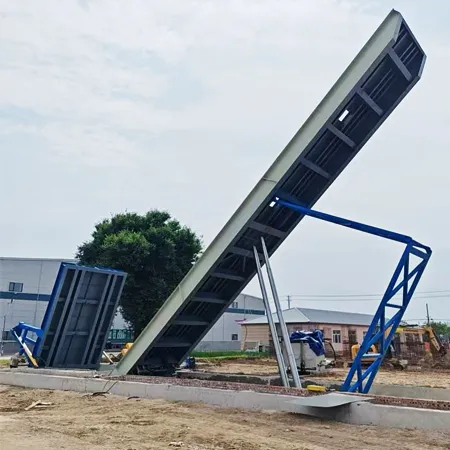
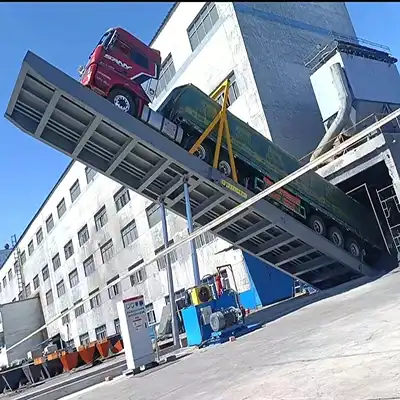
To address this challenge, ZFITA supplied a truck dumping platform with a maximum tilting angle of 55° and integrated vibration devices on both sides of the equipment.
During normal operation, the loaded truck is raised to the maximum dumping angle, allowing most of the DDGS to discharge by gravity. When residual material remains attached to the truck body, the vibration system is activated. High-frequency vibration helps loosen the material adhering to the bottom and side walls, allowing the remaining DDGS to discharge rapidly.
The customized unloading approach helps reduce material loss, improve unloading efficiency and make bulk DDGS transportation more economical.
Project at a Glance
| Item | Project Details |
|---|---|
| End User | Beijing Dabeinong Technology Group |
| Equipment | Hydraulic Truck Dumper / Truck Dumping Platform |
| Dumper Type | Rear-Tipping |
| Maximum Tilting Angle | 55° |
| Material | DDGS |
| Material Type | Corn Distillers Dried Grains with Solubles |
| Special Feature | Side-Mounted Vibration System |
| Unloading Method | Gravity + Vibration-Assisted Discharge |
| Application | Bulk DDGS Truck Unloading |
The Challenge: Unloading Sticky DDGS
DDGS is different from free-flowing bulk materials such as dry grain.
Because of its material characteristics, DDGS can adhere to the bottom and side walls of a truck body during transportation. Simply tilting the truck may discharge most of the load, but a certain amount of material can remain attached to the truck body.
This creates several practical problems.
Residual Material
Material left inside the truck represents a direct loss of product if it cannot be recovered efficiently.
Longer Unloading Time
Operators may need additional manual intervention or other methods to remove material that remains inside the truck.
Reduced Transport Efficiency
If the truck cannot be unloaded completely and efficiently, the unloading cycle becomes longer and overall transportation efficiency is reduced.
The customer therefore needed a truck unloading system capable of handling the specific characteristics of DDGS rather than relying on gravity alone.
ZFITA’s Solution
ZFITA developed the project around a 55° hydraulic rear-tipping truck dumper equipped with vibration devices on both sides.
The basic unloading process uses the truck dumper’s hydraulic lifting system to raise the loaded truck to the required angle. At the maximum 55° tilting angle, most of the DDGS flows out of the truck body under gravity.
For the material that remains attached to the truck body, the vibration devices provide an additional unloading force.
Once activated, the high-frequency vibration helps break the adhesion between the DDGS and the truck body surfaces. The remaining material is then released and discharged into the receiving pit.
This combination of hydraulic tipping + gravity unloading + vibration-assisted discharge was selected specifically for the characteristics of DDGS.
How the DDGS Truck Dumper Works
01 — Loaded Truck Enters
The loaded truck drives onto the truck dumping platform and is positioned for unloading.
The truck remains secured on the platform throughout the lifting process.
02 — Hydraulic Platform Raises the Truck
The hydraulic system raises the truck and its load toward the required dumping angle.
The system can reach a maximum tilting angle of 55°.
03 — Most DDGS Discharges by Gravity
As the truck body reaches the dumping position, the majority of the DDGS flows out naturally under gravity.
At this stage, no additional vibration is required for the bulk of the material.
04 — Vibration System Is Activated
Some DDGS may remain attached to the truck body’s bottom and side walls because of its sticky characteristics.
The vibration devices installed on both sides of the dumper are then activated.
05 — Residual DDGS Is Released
The high-frequency vibration transfers mechanical vibration to the truck body, helping loosen DDGS adhering to the internal surfaces.
The remaining material rapidly falls into the receiving pit.
06 — Truck Returns to the Loading Position
After unloading is completed, the vibration system is stopped and the hydraulic platform returns the truck to its original horizontal position.
The truck can then leave the unloading station and continue its next transport cycle.
Vibration-Assisted Unloading for Sticky Bulk Materials
High-Frequency Vibration
The vibration system provides additional mechanical action when gravity alone cannot completely discharge the material.
Reduced Material Residue
By loosening material attached to the truck body, the system helps reduce the amount of DDGS remaining after the main dumping operation.
Faster Final Discharge
Instead of relying on manual cleaning or repeated truck movements, the residual material can be released through controlled vibration.
Designed for Material Characteristics
The vibration function is not simply an additional feature. It was incorporated specifically to address the unloading behavior of sticky DDGS.
55° Hydraulic Truck Tipping
The truck dumper uses a hydraulic lifting system to raise the loaded truck to a maximum angle of 55°.
The relatively high tipping angle creates a steep discharge path and allows gravity to remove most of the DDGS from the truck body.
However, because DDGS can adhere to the truck body, the system does not rely solely on the tipping angle.
Instead, the unloading process uses two stages:
55° Hydraulic Tipping → Gravity Discharge → Vibration-Assisted Final Discharge
This combination provides a more complete unloading process for sticky bulk materials.
Project Results
More Complete Unloading
The vibration system helps remove DDGS that remains attached to the truck body after the main gravity unloading stage.
Reduced Product Loss
Recovering residual DDGS from the truck helps reduce material left behind after unloading.
Improved Truck Turnaround
Faster removal of residual material reduces the time required to complete the unloading cycle.
Less Manual Cleaning
The vibration-assisted system reduces dependence on manual methods for removing material stuck to the truck body.
Material-Specific Engineering
The truck dumper was configured around the physical characteristics of DDGS rather than using a standard unloading arrangement.
More Efficient Bulk Transportation
More complete unloading and shorter unloading cycles contribute to more efficient use of the transportation fleet.