Project Overview
ZFITA supplied three sets of foundation-mounted drive-through truck dumping systems for Heilongjiang Liangshi Food in China for efficient unloading of rice from bulk trucks.
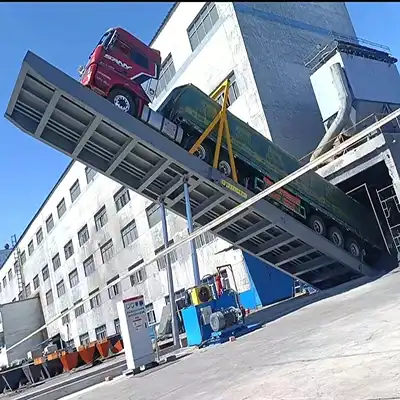
The project uses a hydraulic rear-tipping configuration with a maximum tilting angle of 55°. Unlike a conventional truck dumper that requires trucks to reverse into the dumping position, the drive-through design allows trucks to enter the dumping area from one side, pass over the small dumping deck, and stop at the designated position on the main dumping deck.
The system was installed on a customer-prepared foundation and commissioned by ZFITA. After installation and commissioning, the customer completed the operating shelter, also known as the grain cleaning room, around the unloading system.
The completed installation provides a practical and efficient solution for continuous truck unloading of rice.
Project at a Glance
| Item | Project Details |
|---|---|
| End User | Heilongjiang Liangshi Food |
| Equipment | Drive-Through Type Truck Dumping System |
| Quantity | 3 Sets |
| Configuration | Foundation-Mounted Rear Tipping |
| Maximum Tilting Angle | 55° |
| Material | Rice |
| Operation | Hydraulic |
| Application | Bulk Rice Truck Unloading |
| Installation | Customer-Prepared Foundation |
| Commissioning | ZFITA |
Drive-Through Truck Dumping System Configuration
The system consists of two main hydraulic dumping decks: a small front dumping deck and a large main dumping deck.
The two decks work together to create a safe and efficient drive-through unloading process.
The small dumping deck is positioned at the entrance of the system. Underneath it is the receiving pit, which provides temporary storage for the unloaded rice. The small deck normally covers the pit during truck entry. Once the truck is correctly positioned and secured, the small deck folds upward to open the receiving pit for unloading.
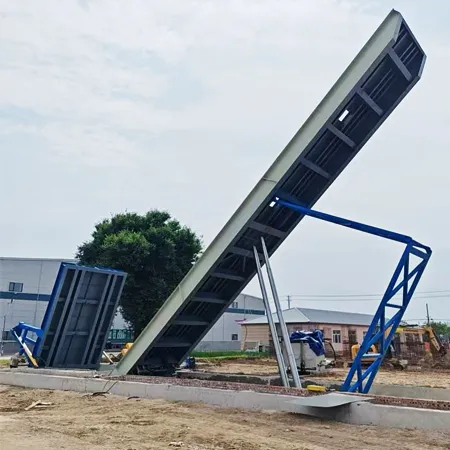
The large dumping deck is the main truck-supporting platform. It carries the loaded truck and uses hydraulic power to raise the complete truck to the required dumping angle. In this project, the maximum tilting angle reaches 55°.
A hydraulic wheel stopper is installed on the main dumping deck. When raised, it securely holds the truck in position and helps prevent the truck from moving or sliding backward while the platform is inclined.
How the Drive-Through Truck Dumping System Works
01 — Truck Drives Through the Entrance
The loaded rice truck enters the dumping station and drives forward over the small dumping deck before reaching the designated stopping position on the main dumping deck.
This drive-through arrangement eliminates the need for the truck to reverse into the dumping position.
02 — Hydraulic Wheel Stopper Secures the Truck
Once the truck reaches the correct position, the hydraulic wheel stopper on the main dumping deck is raised.
The stopper provides a positive mechanical restraint for the truck during the lifting operation, helping prevent unwanted truck movement when the dumping platform is inclined.
03 — Small Dumping Deck Opens the Receiving Pit
After the truck is secured, the small dumping deck folds upward hydraulically.
This opens the receiving pit directly underneath the rear of the truck, creating a clear discharge path for the rice.
04 — Main Dumping Deck Raises the Truck
The main dumping deck is then hydraulically raised together with the fully loaded truck.
For this project, the system can reach a maximum tilting angle of 55°.
As the truck body is inclined, the rice inside the truck is discharged by gravity through the open tailgate into the receiving pit below.
05 — Rice Is Discharged Into the Receiving Pit
The combination of the high dumping angle and gravity allows the rice to flow quickly from the truck into the receiving pit.
In a typical installation, a belt conveyor or other downstream conveying equipment can be positioned beneath the pit to continuously transfer the unloaded rice to the next stage of the handling process.
06 — Both Decks Return to the Loading Position
After unloading is completed, the main dumping deck and small dumping deck return to their original positions.
The hydraulic wheel stopper is lowered, the truck can drive forward out of the unloading station, and the system is ready for the next truck.
Safety-Focused Truck Positioning
Hydraulic Wheel Stopper
One of the important safety features of this project is the hydraulic wheel stopper installed on the main dumping deck.
When the truck is positioned for unloading, the stopper is hydraulically raised to provide a physical restraint at the truck wheels. This helps prevent the truck from rolling or moving backward as the main dumping deck raises the truck to the required dumping angle.
For a drive-through truck dumping system, proper truck positioning and restraint are particularly important because the entire loaded vehicle is lifted during the unloading cycle.
Why a Drive-Through Configuration?
The drive-through configuration is designed around the movement of trucks through the unloading station.
Instead of requiring a loaded truck to reverse into a dumping position, the truck enters from the front, drives over the small dumping deck, reaches the designated position on the main dumping deck, and leaves forward after unloading.
This arrangement can provide several operational advantages:
No Reverse Positioning
Trucks do not need to reverse into the dumping station, simplifying vehicle movement around the unloading area.
Faster Truck Circulation
The drive-through layout provides a more direct traffic flow for repeated truck unloading operations.
Integrated Receiving Pit
The small dumping deck serves as a cover for the receiving pit during truck entry and opens during unloading.
Safe Truck Restraint
The hydraulic wheel stopper provides a dedicated restraint mechanism before the truck is lifted.
Gravity-Based Unloading
The 55° maximum tipping angle allows the rice to discharge from the truck body primarily through gravity after the tailgate is opened.
Foundation-Mounted Installation
This project uses a foundation-mounted configuration.
Before equipment installation, the customer prepared the required civil foundation for the truck dumping system. ZFITA then completed the installation, hydraulic and electrical connections, system commissioning and operational testing.
After the equipment was commissioned, the customer installed the surrounding operating shelter, known locally as a grain cleaning room, providing a dedicated working environment around the unloading system.
This installation approach separates the civil foundation work from the equipment supply and commissioning process while allowing the truck dumping system to be integrated into the customer’s overall grain-handling facility.
Three Truck Dumping Systems for Rice Handling
A total of three drive-through truck dumping systems were supplied for the project.
Using multiple unloading units allows the facility to establish a larger truck receiving capacity and provides greater flexibility for continuous rice unloading operations.
Each system follows the same basic operating cycle:
Truck Entry → Positioning → Wheel Stopper Raised → Small Deck Opens → Main Deck Raises → Rice Discharge → Decks Lower → Truck Exit
This repeatable cycle is the basis for efficient bulk rice receiving and unloading.