Project Overview
ZFITA supplied a ZCT-TT20 hydraulic container tilter for Hangzhou Jianfa Metal Scrap Recycling to improve the loading efficiency of heavy and irregularly shaped metal scrap into 20 ft shipping containers.
Unlike relatively uniform bulk materials, metal scrap often consists of heavy materials with irregular shapes and sizes. When loaded into a horizontal container using conventional methods, significant empty space can remain between and above the scrap pieces. In many cases, a 20 ft container may only reach approximately 60–70% of its practical loading volume, leaving valuable container capacity unused.
In other words, the customer may effectively be paying to transport empty space.
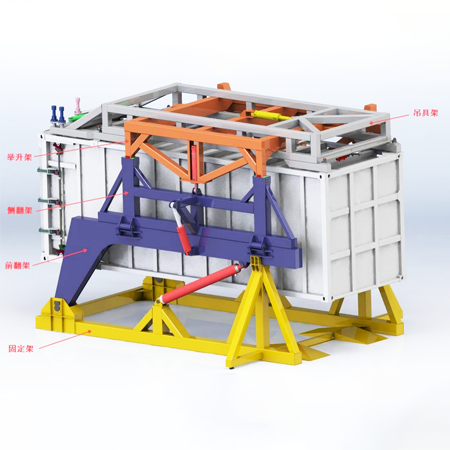
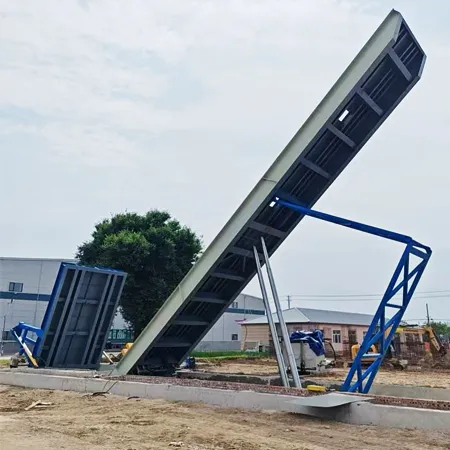
The ZCT-TT20 addresses this challenge by allowing the container to be hydraulically tilted to a near-vertical position, with a maximum tilting angle of 90°. With the container positioned vertically, an excavator equipped with a magnetic lifting attachment can load scrap from above, allowing the irregular metal pieces to settle more efficiently inside the container.
The system is also equipped with an integrated real-time weighing module, allowing operators to monitor the loaded weight directly on the remote-control display and optimize the loading process without exceeding the container’s allowable payload.
For additional operational safety and container protection, the system can also be equipped with hydraulic container door opening/closing, hydraulic container locking and container side-wall protection functions.
Project at a Glance
| Item | Project Details |
|---|---|
| End User | Hangzhou Jianfa Metal Scrap Recycling |
| Equipment | ZCT-TT20 Container Tilter |
| Container Type | 20 ft Shipping Container |
| Material | Metal Scrap |
| Material Characteristics | Heavy and Irregularly Shaped |
| Maximum Tilting Angle | 90° |
| Loading Method | Vertical Loading with Excavator + Magnetic Attachment |
| Weighing | Integrated Real-Time Weighing Module |
| Container Door Control | Hydraulic Automatic Opening / Closing |
| Container Locking | Hydraulic Container Locking System |
| Container Protection | Side-Wall Protection System |
The Challenge: Irregular Scrap Leaves Valuable Container Space Unused
Metal scrap creates a very different loading challenge from conventional bulk materials.
Scrap metal can contain large, heavy and irregularly shaped pieces that do not naturally form a compact load when placed horizontally into a container.
When conventional horizontal loading methods are used, large voids can remain between individual pieces of scrap.
As a result, the container may become difficult to fill efficiently even though the available payload capacity has not been fully utilized.
For a 20 ft container, the customer could find that only around 60–70% of the practical container volume was effectively utilized during conventional horizontal loading.
This means that a substantial portion of the transportation cost can effectively be spent moving unused container space.
The customer therefore needed a loading method that could make better use of the container’s internal volume while still controlling the total loaded weight.
ZFITA Solution
ZFITA supplied the ZCT-TT20 hydraulic container tilter, configured for vertical loading of metal scrap.
The system can hydraulically rotate the container from its normal horizontal position to a maximum angle of 90°.
Once the container is tilted, an excavator equipped with a magnetic attachment can pick up scrap metal and load it vertically into the container.
The vertical loading orientation changes the way irregular scrap settles inside the container. Instead of simply accumulating from one side through a horizontal opening, the scrap can fall deeper into the container under gravity, helping reduce large empty spaces and improve container utilization.
The system also integrates several functions designed specifically for heavy scrap handling:
Container Tilting + Vertical Scrap Loading + Real-Time Weighing + Hydraulic Locking + Automatic Door Control + Container Protection
How the ZCT-TT20 Scrap Loading System Works
01 — Container Is Positioned on the Tilter
The empty 20 ft container is positioned on the ZCT-TT20 container tilter.
The container is then secured by the hydraulic locking system before the tilting operation begins.
02 — Container Is Hydraulically Tilted
The ZCT-TT20 raises and rotates the container using its hydraulic system.
The container can be tilted to the required working angle, with a maximum angle of 90°.
This creates a vertical loading orientation for the scrap metal.
03 — Container Doors Are Opened
The optional hydraulic door-control system allows the operator to open the container doors remotely.
Hydraulic arms control the door-opening and closing process, reducing the need for operators to manually handle heavy container doors.
04 — Scrap Is Loaded Vertically
An excavator equipped with a magnetic lifting attachment picks up the metal scrap and loads it into the vertically positioned container.
The scrap falls downward and settles deeper into the container, helping make more effective use of the available internal volume.
05 — Weight Is Monitored in Real Time
The integrated weighing system continuously measures the loaded weight.
The operator can view the current loading weight directly on the container tilter remote-control display.
This allows the operator to control the loading process according to the target payload.
06 — Container Is Returned to the Horizontal Position
After the desired loading weight is reached, the loading operation is completed.
The container doors can be hydraulically closed, the container is returned to the horizontal transport position, and the locking system maintains secure container positioning during handling.
The loaded container is then ready for transport.
Vertical Loading for Metal Scrap
Better Use of Container Volume
Tilting the container vertically changes the loading geometry and allows irregular scrap to settle deeper into the container.
Reduced Empty Space
The vertical loading method can reduce large voids that commonly occur when irregular scrap is loaded horizontally.
Higher Loading Utilization
More effective use of the container’s internal volume can help increase the amount of scrap transported in each container.
Suitable for Heavy Irregular Materials
The system is particularly suited to scrap metal and other materials where irregular shape makes conventional horizontal loading inefficient.
Real-Time Weighing for Controlled Container Loading
Another important feature of the ZCT-TT20 used in this project is its integrated weighing system.
The container tilter can measure the loaded weight during the loading process, while the current weight is displayed directly on the remote-control screen.
This gives the operator immediate feedback while loading scrap.
The operator can therefore:
- Monitor the current container weight
- Control the loading process according to the target payload
- Avoid unnecessary underloading
- Reduce the risk of overloading
- Improve consistency between loaded containers
For scrap recycling operations, where material density and piece size can vary significantly, real-time weighing is particularly useful.
Hydraulic Container Door Control
The ZCT-TT20 can be equipped with a hydraulic door-control system.
Hydraulic arms are used to control the container doors, allowing the operator to open or close the doors through the remote-control system.
This feature is particularly useful when handling heavy scrap because operators do not need to manually manipulate the container doors during the loading operation.
Hydraulic Container Locking System
During container tilting, secure container retention is critical.
The ZCT-TT20 can be equipped with a dedicated hydraulic container locking system.
Hydraulic locking mechanisms engage the container’s designated locking points and hold the container securely during lifting and tilting.
This provides an additional layer of mechanical security while the container is rotated toward the vertical position.
Container Side-Wall Protection
The ZCT-TT20 can also incorporate a container protection system, referred to as container side-wall protection.
During heavy scrap loading, irregular metal pieces can place significant localized forces against the container walls.
The protection system is designed to help support and protect the container side walls during loading, reducing the risk of excessive outward deformation.
For scrap recycling applications where heavy and irregular materials are handled repeatedly, container protection can help extend the usable life of shipping containers.
Engineering Highlights
90° Maximum Tilting
The ZCT-TT20 can rotate the container to a maximum angle of 90°, creating a vertical loading position for heavy irregular scrap.
Vertical Scrap Loading
An excavator and magnetic attachment can load scrap vertically, helping utilize the internal volume of the container more effectively.
Real-Time Weighing
The operator can monitor the loaded weight directly from the remote-control display.
Hydraulic Container Locking
A hydraulic locking system securely holds the container during lifting and tilting.
Automatic Door Operation
Hydraulic arms allow container doors to be opened and closed remotely.
Container Protection
The optional protection system helps protect the container side walls from excessive outward loading forces.
Project Results
Improved Container Utilization
Vertical loading helps reduce unused space caused by irregular scrap geometry.
More Scrap per Container
Better utilization of the container’s internal volume can allow more material to be transported per container, subject to allowable payload limits.
Controlled Loading Weight
Real-time weighing allows the operator to balance container utilization with payload requirements.
Safer Container Handling
Hydraulic container locking provides secure retention during the tilting process.
Easier Door Operation
Hydraulic door control reduces the need for manual handling of heavy container doors.
Improved Container Protection
The optional side-wall protection system helps reduce the risk of container deformation during heavy scrap loading.