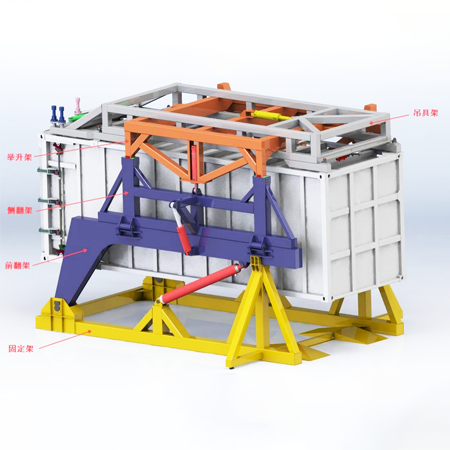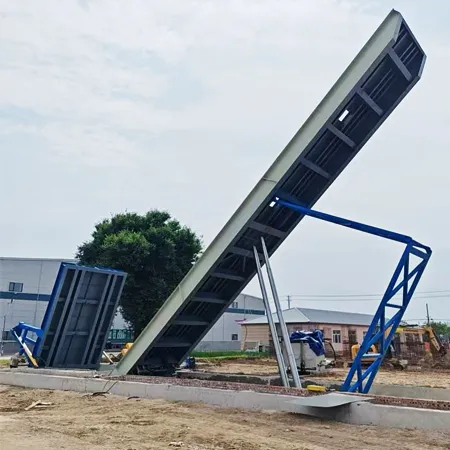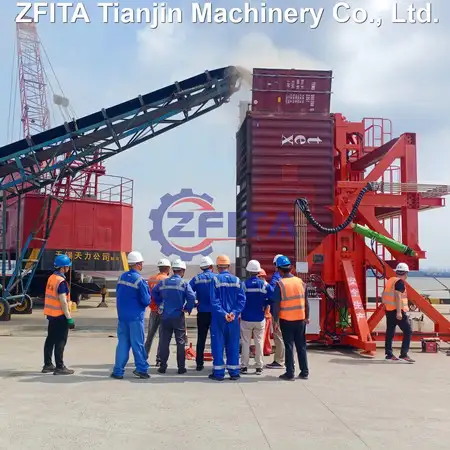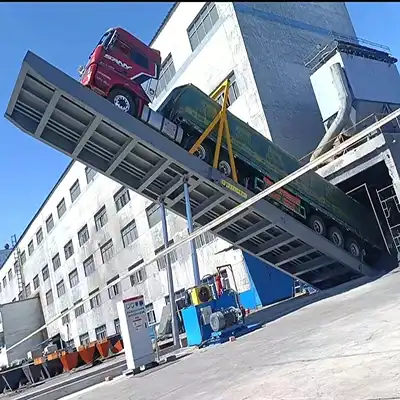
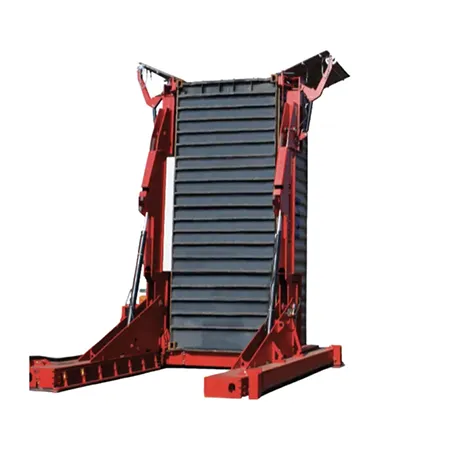
The shipping container tilter eliminates use of bags and efficiently transports bulk materials.
The shipping container tilter eliminates the use of any type of bags (including FIBCs) and efficiently transports bulk materials.
Using a controlled tilting angle, the user can load directly into shipping containers faster without the extra cost of additional lifting equipment like forklifts. The container tilter can be fully operated by one person working with a handheld remote control at a safe distance.
The built-in digital scale means each load is weighed in real time by the operator. As a result, every container is loaded right up to the maximum allowed weight accurately, which results in up to 20% less containers and trucks required to transport your bulk materials.
How Does a Shipping Container Tilter Improve Bulk Loading?
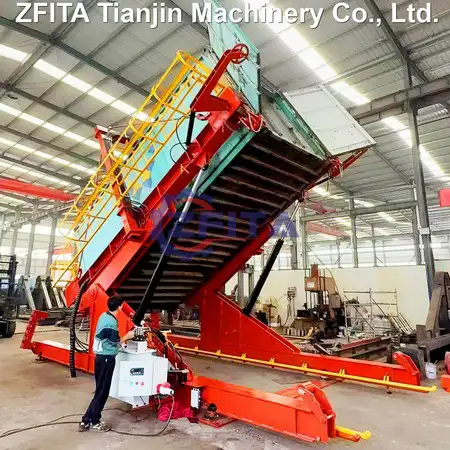
A shipping container tilter is designed to change the position of a standard shipping container during the loading process. Instead of relying on bags, FIBCs, or complex lifting equipment to move bulk materials into the container, the tilter positions the container at a controlled angle so that material can be loaded efficiently through the container opening.
This approach is particularly useful when bulk materials need to be loaded directly into containers at warehouses, production facilities, mines, ports, and other industrial sites. By integrating container positioning, loading, and weighing into one system, the equipment can simplify the overall material handling process.
The tilting angle can be controlled according to the loading application and material characteristics. This provides operators with better control over the loading process while reducing unnecessary material handling steps.
Faster Container Loading With Fewer Handling Steps
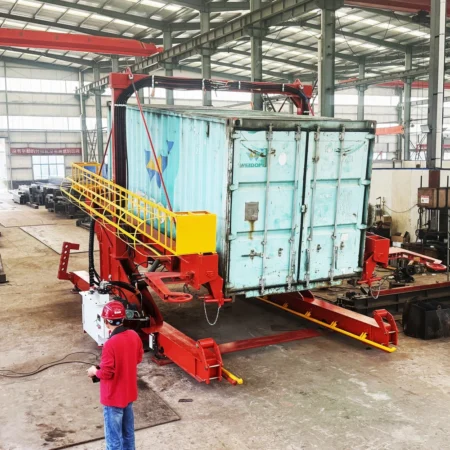
Traditional bulk container loading can involve multiple pieces of equipment and several handling stages. Bulk materials may first need to be packed into bags, moved by forklift, positioned above the container, and then emptied into the container. Each additional step requires time, labor, and equipment.
A container tilter can reduce these handling steps by allowing bulk material to be loaded directly into the shipping container. This can help improve loading speed while reducing dependence on forklifts and other lifting equipment.
For facilities handling a large number of containers, even a small reduction in loading time can have a significant impact on daily throughput. Faster loading also helps reduce truck waiting times and allows loading areas to handle more containers during the same working period.
Accurate Weighing Helps Maximize Container Capacity
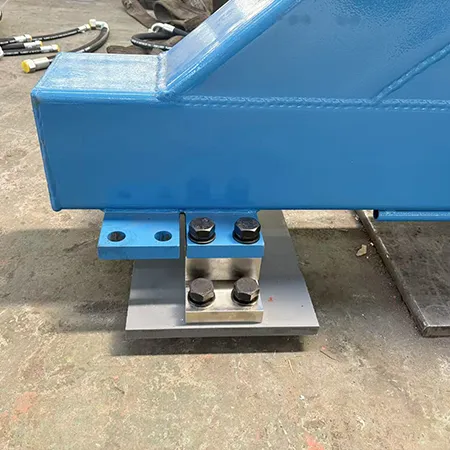
Container payload limits are an important consideration when transporting bulk materials internationally. Underloading a container means unused payload capacity, while overloading can create safety, compliance, and transportation problems.
An integrated weighing system allows the operator to monitor the material weight during loading. The operator can therefore control the amount of material being loaded and stop the process when the target weight is reached.
This makes the container tilter more than a positioning machine. It becomes part of an integrated bulk material handling system in which loading and weighing can be completed during the same operation.
Better weight control can also improve transportation efficiency. When containers are consistently loaded close to their permitted payload, companies can reduce the number of containers and trucks required for moving the same total quantity of bulk material.
One-Person Operation Improves Workplace Efficiency
Labor requirements are another important factor in bulk material handling. Conventional loading methods may require operators for forklifts, lifting equipment, material feeding, and container positioning.
The shipping container tilter is designed to simplify these operations. With hydraulic movement and handheld remote control, one operator can control the container positioning process from a safe location.
Reducing the number of operators required for each loading cycle can help companies lower labor costs and simplify daily operations. It can also make the loading process easier to standardize, particularly for facilities that handle containers on a regular basis.
Suitable for Different Bulk Materials
Shipping container tilters can be used for a wide range of free-flowing bulk materials. Typical applications include the handling of minerals, grains, agricultural products, biomass, resins, chemicals, cement-related materials, and recycled materials.
The appropriate loading configuration depends on the material characteristics, required capacity, container size, loading method, and site conditions. For this reason, a container tilter can be configured as part of a complete bulk material handling solution rather than functioning as an isolated piece of equipment.
For companies handling different materials or operating multiple loading points, customized equipment can provide greater flexibility while maintaining a consistent container loading process.
Reducing Equipment and Operating Costs
One of the main advantages of direct bulk container loading is the potential reduction in supporting equipment. When bulk materials can be transferred directly into the container, there may be less need for intermediate packaging, forklifts, or additional lifting operations.
This can reduce not only the initial equipment investment but also ongoing operating costs such as labor, maintenance, fuel, and packaging materials.
The economic benefit becomes more significant as container loading volume increases. A facility loading dozens or hundreds of containers each month can potentially achieve substantial savings by simplifying the material flow and increasing the utilization of each container.
Improving Safety During Container Loading
Container loading involves several potential hazards when heavy equipment and manual operations are combined. Forklift movement, suspended loads, manual handling, and operators working close to containers can increase operational risks.
A remotely controlled container tilter allows the operator to control the equipment without remaining directly beside the moving mechanism. Controlled hydraulic movement also provides a more consistent loading process compared with improvised lifting or manual container positioning methods.
Proper guarding, safety interlocks, emergency stop systems, and site-specific safety procedures should also be incorporated into the complete installation.
Where Is a Shipping Container Tilter Used?
Shipping container tilters are suitable for operations where bulk materials need to be loaded directly into standard shipping containers. Common application areas include:
- Mining and mineral processing
- Grain and agricultural bulk handling
- Biomass and renewable materials
- Plastic resin and polymer production
- Cement and construction materials
- Waste and recycling operations
- Port and logistics facilities
- Industrial bulk material distribution
The equipment can be integrated with conveyors, hoppers, feeders, loading systems, and weighing equipment to create a complete container loading solution.
A More Efficient Approach to Bulk Container Handling
For companies transporting large quantities of bulk materials by container, improving the loading process can have a direct impact on logistics costs and operational efficiency.
A shipping container tilter combines controlled container positioning, direct bulk loading, remote operation, and real-time weighing into a single handling process. By reducing unnecessary handling steps and making better use of available container payload capacity, it provides an alternative to traditional bag-based loading methods.
For high-volume bulk material operations, the goal is not simply to load a container faster. It is to create a safer, simpler, and more efficient bulk container loading system that reduces labor requirements, minimizes supporting equipment, and improves transportation efficiency.