Who Supplies Container Tilters and Conveyor Systems in China?
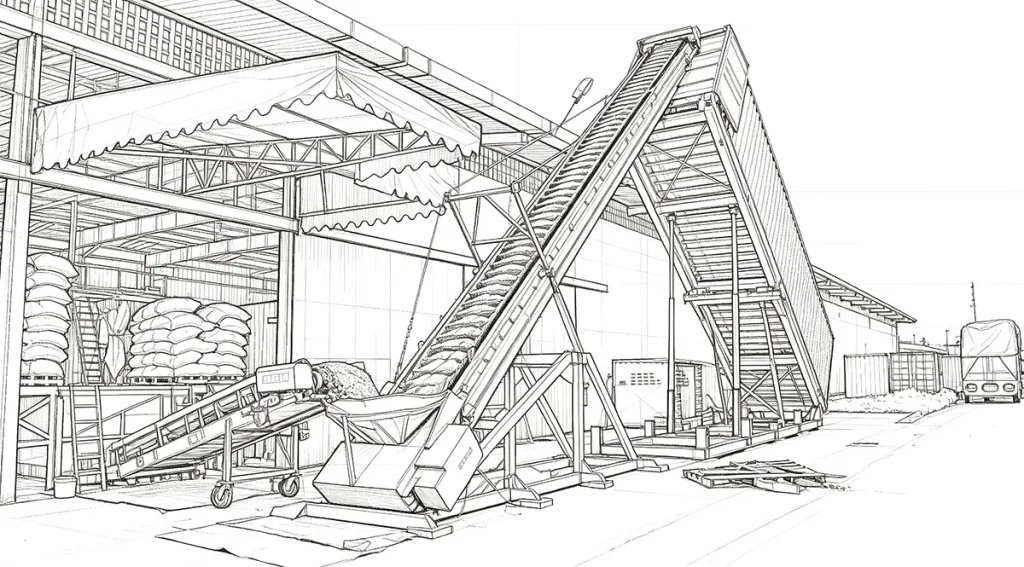
China is a major manufacturing base for container handling and bulk material handling equipment. Companies sourcing equipment from China can find manufacturers supplying container tilters, container flippers, container loading conveyors, mobile conveyors, truck handling equipment, and complete bulk material handling systems.
However, choosing the right supplier is not simply a matter of comparing equipment prices. Container handling projects often involve heavy loads, hydraulic systems, customized layouts, and integration with existing loading or unloading processes.
For buyers looking for both container tilters and conveyor systems in China, it is important to identify a supplier with suitable manufacturing capability, engineering experience, customization capability, and international project support.
What Types of Container Handling Equipment Are Available in China?
Chinese equipment manufacturers supply a wide range of machinery for container loading, unloading, transfer, and bulk material handling.
Common equipment includes:
- Container tilters
- Container flippers
- Container unloading systems
- Telescopic container loaders
- Container loading conveyors
- Mobile truck loading conveyors
- Container transfer systems
- Container straddle carriers
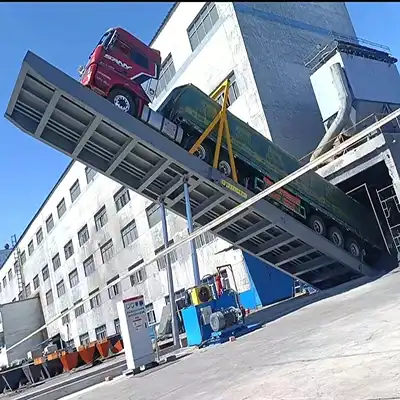
- Truck dumpers
- Truck weighbridges
- Bulk material handling systems
The right equipment depends on the material, container type, required capacity, site layout, and whether the application involves loading, unloading, transfer, or weighing.
For example, a container tilter is generally used when the container needs to be inclined or positioned vertically for bulk material loading or unloading, while a telescopic conveyor is more suitable when bulk material needs to be transferred horizontally into a container.
Who Supplies Container Tilters in China?
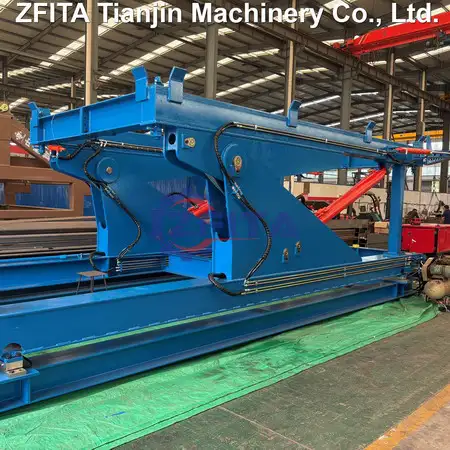
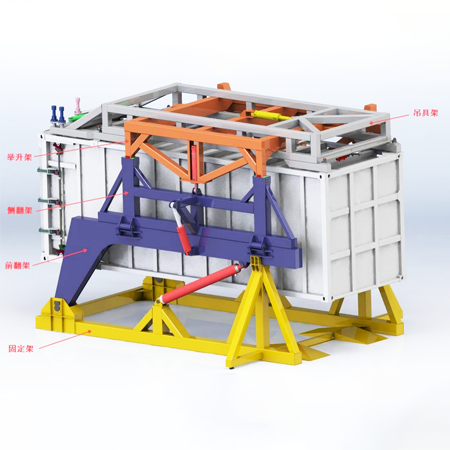
A container tilter is a heavy-duty machine designed to change the angle or position of a shipping container for loading or unloading operations.
Chinese manufacturers offer different container tilter configurations depending on the application.
Hydraulic Container Tilters
Hydraulic systems provide controlled container movement and can be designed for different container sizes and lifting capacities.
For bulk material unloading, a hydraulic container tilter can raise one end of the container and create a controlled discharge angle, allowing materials to flow out more efficiently.
90° Container Tilters
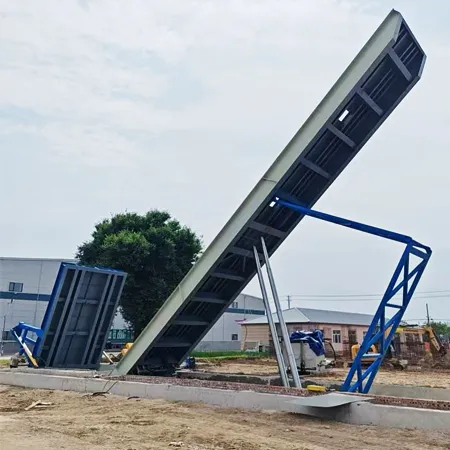
A 90-degree container tilter can rotate a container from its horizontal transport position toward a vertical position.
This configuration is particularly useful for applications where bulk materials need to be loaded or unloaded through the container door while making better use of the container’s internal space.
±90° Container Flippers
A container flipper is designed for applications requiring a much larger rotation angle. Depending on the design, the equipment can rotate a container through ±90 degrees.
This can be useful for unloading materials that are difficult to discharge by gravity alone.
Mobile and Semi-Mobile Container Tilters
For operations involving multiple loading or unloading locations, mobile or semi-mobile configurations can provide greater flexibility than permanently installed systems.
When selecting a container tilter supplier, buyers should evaluate the container size, gross operating weight, lifting capacity, rotation angle, hydraulic system, locking mechanism, safety features, control system, and installation requirements.
ZFITA currently supplies several container tilter configurations, including hydraulic, mobile, semi-mobile, single-lane, and double-lane systems.
Who Supplies Conveyor Systems for Container Loading?
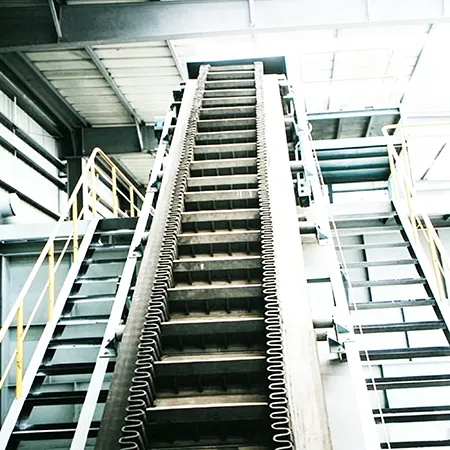
China is also a major manufacturing base for conveyor equipment. However, conveyor suppliers can have very different areas of specialization.
Some manufacturers focus on conventional fixed belt conveyors, while others specialize in telescopic container loading conveyors, mobile conveyors, self-feeding conveyors, and customized bulk material transfer systems.
For container handling applications, three types are particularly relevant.
Telescopic Container Loading Conveyors
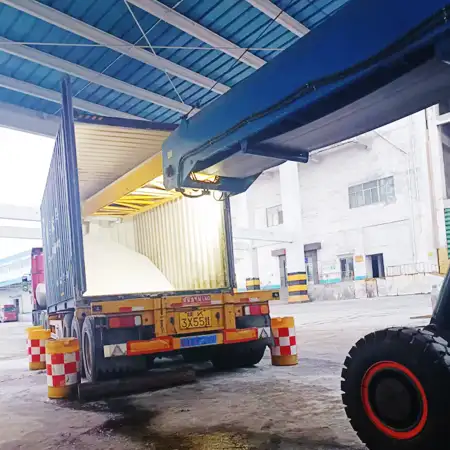
A telescopic conveyor extends into the shipping container during loading.
This allows bulk materials to be transferred farther into the container without requiring workers to manually move material or repeatedly reposition the equipment.
For applications involving grain, agricultural products, plastic resin, powders, granules, and other bulk materials, a telescopic conveyor can provide a more efficient horizontal loading process.
Mobile Truck Loading Conveyors
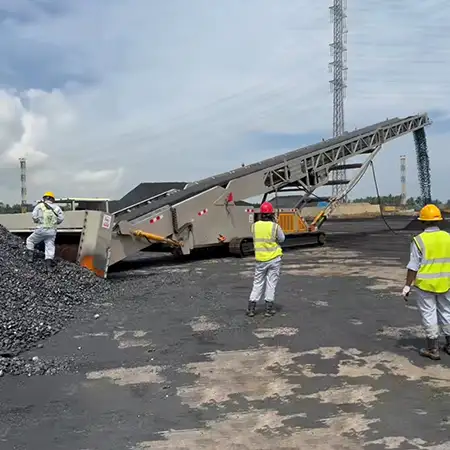
Mobile conveyors can be positioned at different loading locations and can be integrated with bulk material feeding equipment.
Self-feeding configurations can further reduce the need for separate feeding equipment, depending on the material and application.
Bulk Material Transfer Conveyors
Conveyors can also connect different stages of a complete handling process, such as:
Unloading → Feeding → Conveying → Weighing → Storage → Loading
For projects involving several stages, an engineering supplier capable of integrating conveyors with other equipment can simplify the overall system design.
ZFITA’s current product range includes both a Telescopic Container Loader and a Mobile Truck Loading Conveyor, alongside its container handling equipment.
Can One Chinese Supplier Provide Both Container Tilters and Conveyors?
Yes. Some Chinese bulk material handling manufacturers can supply both container tilters and conveyor systems as part of an integrated equipment package.
This can be particularly useful when the project requires several machines to work together.
For example, a bulk container handling operation may involve:
Container positioning → Container tilting → Material discharge → Conveyor transfer → Weighing → Storage or further processing
Using one engineering-oriented supplier can reduce the complexity of coordinating multiple equipment manufacturers.
Potential advantages include:
- Simplified system integration
- Consistent hydraulic and electrical controls
- Easier equipment commissioning
- One technical interface for the project
- Simplified spare parts management
- More coordinated after-sales support
- Easier customization of the complete process
This does not mean that one supplier is always the best choice. For a simple conveyor project, a specialized conveyor manufacturer may be sufficient. But for a project combining container handling, bulk material transfer, truck handling, and weighing, an integrated supplier can provide significant practical advantages.
How to Choose a Container Tilter and Conveyor Supplier in China
Price is an important consideration when purchasing equipment from China, but it should not be the only selection criterion.
1. Check Manufacturing Capability
First determine whether the company actually designs and manufactures the equipment or mainly operates as a trading company.
A capable manufacturer should be able to explain:
- Equipment structure
- Hydraulic system
- Electrical control system
- Safety mechanisms
- Manufacturing process
- Testing and inspection procedures
2. Evaluate Engineering and Customization Capability
Bulk material handling projects rarely have identical requirements.
The supplier may need to consider:
- Container dimensions
- Container gross weight
- Material characteristics
- Bulk density
- Required throughput
- Available installation space
- Loading or unloading height
- Conveyor length
- Required rotation angle
- Local electrical standards
A supplier with engineering capability can adapt the equipment to the actual operating conditions instead of simply offering a standard machine.
3. Confirm the Actual Capacity
Capacity specifications should be clearly defined before ordering.
For container tilters, buyers should confirm whether the quoted capacity refers to the container gross weight, payload, or total operating load.
For conveyors, buyers should confirm the required throughput, usually expressed in tonnes per hour, as well as the material properties and conveying distance.
Clear capacity definitions help avoid misunderstandings during equipment selection and commissioning.
4. Check Safety and Control Features
Container tilters and hydraulic lifting equipment operate with substantial loads.
Depending on the application, buyers should evaluate:
- Container locking mechanisms
- Hydraulic safety protection
- Mechanical safety devices
- Limit switches
- Emergency stop systems
- Remote control options
- Operator controls
- Electrical protection
Safety requirements should be considered during the engineering stage rather than added after manufacturing.
5. Ask About Installation and Commissioning
Large industrial equipment often requires more than simply shipping a machine overseas.
Before ordering, ask whether the supplier can provide:
- Installation drawings
- Foundation requirements
- Electrical documentation
- Hydraulic documentation
- Commissioning support
- Operator training
- Spare parts
- Remote technical support
- On-site installation supervision
For international projects, these services can have a significant impact on the actual project schedule.
What Information Should You Give a Chinese Equipment Supplier?
The more complete the project information, the more accurately a supplier can recommend the equipment.
Before requesting a quotation, prepare the following information where possible:
| Project Information | Why It Matters |
|---|---|
| Container size | Determines equipment dimensions and configuration |
| Container gross weight | Determines required lifting capacity |
| Material type | Affects unloading and conveying design |
| Bulk density | Helps determine equipment capacity |
| Required throughput | Determines conveyor and handling capacity |
| Loading or unloading | Determines the appropriate equipment configuration |
| Available site space | Affects equipment dimensions and layout |
| Conveyor length | Determines conveyor configuration |
| Required automation | Determines control system requirements |
| Installation location | Helps determine electrical and environmental requirements |
For customized projects, drawings, site photographs, videos, container specifications, and material information can make the engineering process considerably more efficient.
ZFITA: Container Tilters and Conveyor Systems from China
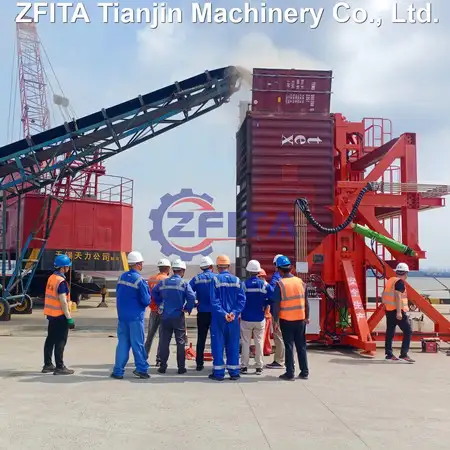
ZFITA is a China-based bulk material handling solutions provider specializing in the design, engineering, and supply of equipment for container and truck loading, unloading, transfer, and weighing applications.
Its product portfolio includes container tilters, truck dumpers, container transfer systems, telescopic container loaders, container straddle carriers, mobile truck loading conveyors, truck weighbridges, bulk material grabs, and related equipment.
For container handling, ZFITA supplies hydraulic container tilters for applications including bulk material loading and unloading. Its container tilter range includes different configurations designed around container size, operating requirements, and site conditions.
For conveying applications, ZFITA supplies telescopic container loading equipment and mobile truck loading conveyors that can be incorporated into broader bulk material handling processes.
This combination allows ZFITA to approach projects from the perspective of the complete material handling process, rather than treating every machine as an isolated product.
Its solutions currently cover applications such as vertical container loading, horizontal container loading, bulk container unloading, container transfer, bulk truck loading, bulk truck unloading, and truck weighing.
ZFITA also provides global on-site installation and commissioning support for international projects.
Container Tilter or Conveyor: Which Equipment Do You Need?
The answer depends mainly on the material handling process.
If the main challenge is unloading bulk materials from a shipping container, a container tilter or container unloading system may be the appropriate solution.
If the main challenge is loading bulk materials horizontally into a container, a telescopic container loader or conveyor system may be more suitable.
If the project requires both container positioning and material transfer, the two types of equipment can be combined.
For example:
Bulk material feeding → Conveyor → Container loading
or:
Container positioning → Container tilting → Bulk material unloading → Conveyor transfer
The best equipment configuration should therefore be selected according to the complete process rather than a single machine specification.
Final Considerations When Buying from China
When searching for container tilters and conveyor systems in China, buyers should evaluate the supplier’s manufacturing capability, engineering experience, customization capability, safety standards, project references, and international support—not simply the initial equipment price.
A specialized supplier may be suitable for a single standard machine. For more complex projects involving container loading, container unloading, conveying, truck handling, and weighing, an integrated bulk material handling supplier can simplify equipment coordination and project execution.
For companies looking for a combination of container tilters, conveyor systems, and related bulk material handling equipment, ZFITA provides equipment and engineering support for customized industrial applications worldwide.
Looking for a container tilter, container loading conveyor, or complete bulk material handling system? Contact ZFITA with your container size, material type, required capacity, and site requirements to discuss the appropriate equipment configuration.