When large quantities of grain need to be unloaded from trucks, unloading speed directly affects truck turnaround time, labor costs and overall handling efficiency. The right unloading method depends on the truck type, grain characteristics, available space and the downstream conveying or storage system.
For high-volume operations, a hydraulic truck dumper can provide one of the fastest ways to unload grain by lifting and tilting the entire truck or trailer. Instead of removing grain bucket by bucket or relying on slow manual handling, the truck load is discharged primarily by gravity.
What Are the Fastest Ways to Unload Grain from Trucks?
Several unloading methods are commonly used for grain handling operations.
1. Hydraulic Truck Dumper
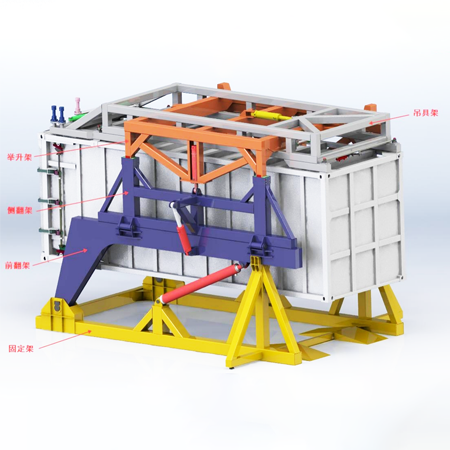
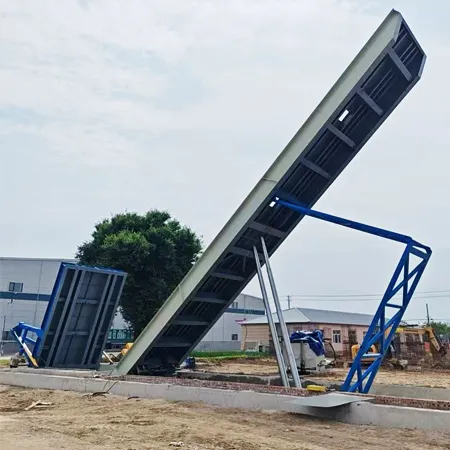
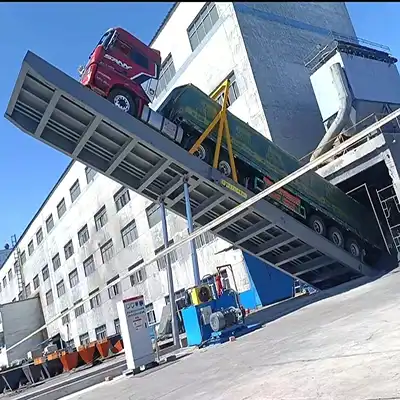
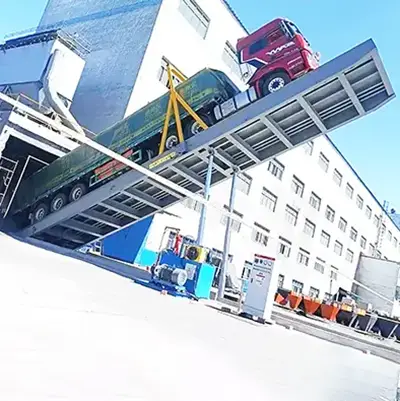
A hydraulic truck dumper, also called a truck dumping platform or truck dumper, lifts the entire loaded truck or trailer and tilts it to a steep unloading angle.
The truck drives onto the heavy-duty dumping platform and is secured in position. Hydraulic cylinders then raise one end of the platform, allowing the grain to flow out through the truck body into a receiving hopper.
This method is particularly effective when a large volume of grain must be unloaded quickly. Because the entire truck load can be discharged at once, a hydraulic truck dumper can significantly reduce truck turnaround time compared with manual or mechanical unloading methods.
ZFITA truck dumpers can be designed for different truck sizes, load capacities and site conditions. Depending on the application, the system can be supplied with a receiving hopper, belt conveyor, mobile conveyor or other downstream material-handling equipment.
2. Drive-Over Hopper
A drive-over hopper provides another fast unloading solution, particularly for hopper-bottom trailers.
The truck or trailer drives over a receiving grate, and the bottom gates are opened so that grain flows directly into the hopper below. A conveyor or other conveying system then transfers the grain to storage or another processing point.
This approach can provide high continuous throughput and is especially suitable when trucks are already equipped with bottom-discharge systems.
However, a drive-over hopper requires a compatible truck or trailer and an appropriate receiving arrangement. It is therefore not a direct substitute for a truck dumper in every application.
3. Pneumatic Grain Vacuum
High-capacity pneumatic grain vacuums use suction to remove grain from a truck or trailer and transport it through a pipeline.
This method can be useful when conventional receiving pits or dumping platforms are not available. It also provides flexibility for certain grain-handling applications where access or site conditions make mechanical unloading difficult.
The main consideration is that pneumatic conveying requires dedicated vacuum equipment and can involve higher energy consumption compared with gravity-based unloading.
4. Gravity Discharge from Hopper-Bottom Trailers
Hopper-bottom trailers can discharge grain through bottom gates directly into a receiving pit, hopper or conveyor.
Once the gates are opened, gravity provides continuous material flow without requiring the entire truck to be lifted.
This is a simple and efficient method when the fleet already consists of hopper-bottom trailers and the receiving infrastructure is designed accordingly.
For conventional trucks or trailers without bottom-discharge capability, however, another unloading system may be required.
Why Use a Truck Dumper for Fast Grain Unloading?
For operations that need to unload large quantities of grain from conventional trucks or trailers, a truck dumper offers several important advantages.
Fast Truck Turnaround
The primary advantage is unloading speed. Instead of transferring grain from the truck in multiple stages, the truck body is tilted to allow the load to discharge rapidly.
A properly designed hydraulic truck dumping system can unload a large truck load in a short period, helping reduce waiting time and increasing the number of trucks that can be handled during a working day.
Gravity Does Most of the Work
A truck dumper uses the natural flow of grain to its advantage.
Hydraulic cylinders raise the truck platform to a steep angle, and gravity causes the grain to flow toward the receiving hopper. This reduces the need for additional mechanical handling during the initial unloading stage.
Suitable for Large Truck Loads
Modern grain trucks and semi-trailers can carry very large loads. A heavy-duty truck dumping platform is designed to support the combined weight of the vehicle and its cargo during the lifting and unloading process.
ZFITA truck dumpers can be engineered according to the required truck dimensions, rated load capacity, dumping angle and site conditions.
Easy Integration with Conveying Systems
A truck dumper does not have to operate as a standalone machine.
For a complete grain unloading system, the truck dumping platform can be integrated with:
- Receiving hoppers
- Belt conveyors
- Mobile conveyors
- Bucket elevators
- Storage silos
- Grain processing systems
- Stockpiling systems
This allows the complete system to move grain from the truck directly toward storage, processing or the next transportation stage.
How Does a Hydraulic Truck Dumper Work?
A typical hydraulic truck dumping system follows a simple unloading sequence:
1. Truck Positioning
The loaded truck drives onto the dumping platform and is positioned according to the designed unloading configuration.
2. Truck Securing
Wheel stops, restraints or other safety devices secure the truck during the lifting process.
3. Hydraulic Lifting
Hydraulic cylinders raise the platform and truck body to the required dumping angle.
4. Grain Discharge
As the truck reaches the unloading angle, grain flows from the truck body into the receiving hopper primarily under gravity.
5. Material Conveying
A belt conveyor or other conveying equipment transfers the discharged grain to storage, processing or another destination.
6. Platform Returns
After unloading is completed, the hydraulic system lowers the platform back to its original position and the truck can leave.
This simple process allows the unloading operation to be repeated efficiently for the next truck.
Truck Dumper vs. Other Grain Unloading Methods
There is no single unloading method that is best for every grain-handling operation.
| Unloading Method | Best Suited For | Main Advantage |
|---|---|---|
| Hydraulic Truck Dumper | Large truck and trailer loads | Fast unloading using gravity |
| Drive-Over Hopper | Hopper-bottom trailers | Continuous bottom discharge |
| Pneumatic Grain Vacuum | Flexible or restricted-site unloading | No conventional dumping pit required |
| Gravity Discharge | Hopper-bottom trailers | Simple and energy-efficient |
The important point is to select the unloading equipment according to the truck type and the overall material-handling system.
For operations handling conventional trucks or trailers where rapid unloading is a priority, a hydraulic truck dumper can be a highly effective solution.
Choosing the Right Truck Dumper for Grain
Before selecting a truck dumping platform, several factors should be considered.
Truck and Trailer Dimensions
The dumping platform must accommodate the actual truck or trailer dimensions, wheelbase and axle configuration.
Rated Load Capacity
The system must be designed for the combined weight of the truck and its maximum cargo load. Heavy-duty grain applications may require a high-capacity hydraulic structure.
Dumping Angle
The required dumping angle depends on the grain characteristics, truck body design and receiving hopper configuration.
ZFITA truck dumpers can be designed with different dumping angles according to the application. Some grain-handling projects may require angles around 45°–55° or higher depending on the material and truck body.
Receiving Hopper and Conveyor
The truck dumper should be designed together with the receiving and conveying equipment rather than treated as an isolated machine.
A well-designed system can combine a truck dumper + receiving hopper + belt conveyor to create a complete grain unloading solution.
Foundation or No-Foundation Installation
Site conditions are another important consideration.
Depending on the project, truck dumping platforms can be designed with conventional foundations or configurations that reduce civil construction requirements. The best choice depends on site conditions, truck traffic, installation requirements and project budget.
ZFITA Truck Dumping Solutions for Grain Handling
ZFITA designs and manufactures hydraulic truck dumpers and truck dumping platforms for bulk material handling applications, including grain, corn, wheat and other dry bulk materials.
Our truck dumpers can be customized according to:
- Truck and trailer dimensions
- Rated loading capacity
- Required dumping angle
- Receiving hopper design
- Conveyor configuration
- Site layout
- Foundation conditions
- Automatic or manual operation requirements
For larger projects, ZFITA can also integrate the truck dumper with conveyors and other bulk material handling equipment to create a complete truck unloading and material transfer system.
This approach is particularly useful when the requirement is not simply to unload a truck, but to move grain efficiently from truck → receiving hopper → conveyor → storage or processing system.
Conclusion
If the goal is to unload grains quickly from trucks, the best solution depends on the truck type and the complete material-handling process.
Hopper-bottom trailers can be efficiently unloaded through drive-over hoppers or gravity discharge systems, while pneumatic grain vacuums provide flexibility for specialized applications.
For high-volume operations that need to unload large truck loads rapidly, however, a hydraulic truck dumper or truck dumping platform provides a highly effective solution. By lifting the entire truck and using gravity to discharge the grain, it can reduce truck turnaround time and integrate easily with downstream conveyors and storage systems.
For customized grain unloading applications, ZFITA can design a truck dumper and complete bulk material handling system around the customer’s truck type, capacity, site layout and conveying requirements.