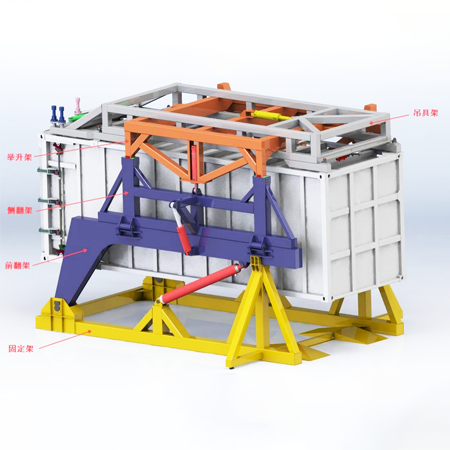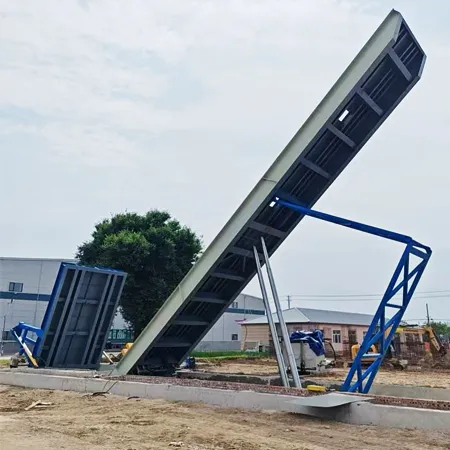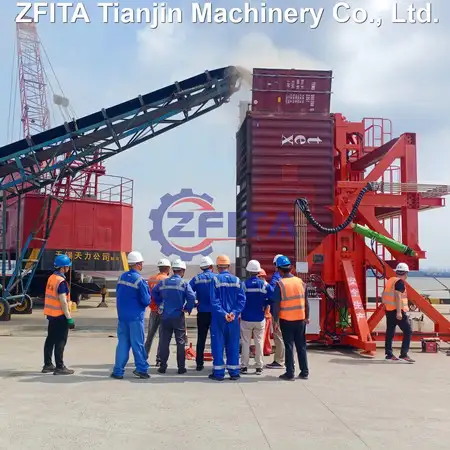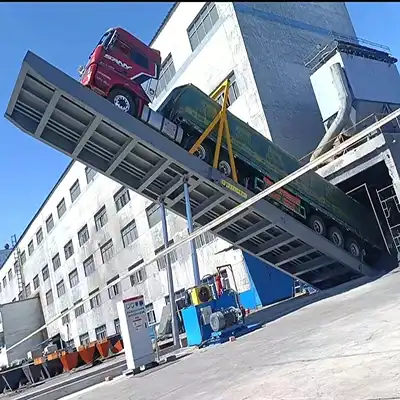
A container tilter is used to tilt a shipping container to a steep angle, typically up to 90°, so bulk materials can be unloaded by gravity. It is commonly used for handling dry bulk materials such as fertilizer, grain, salt, minerals, coal and other free-flowing materials transported in 20-foot or 40-foot containers.
Instead of unloading the container manually or using a crane to lift the cargo, a hydraulic container tilter secures the container and rotates it together with the tilting frame. This allows the material to flow out through the container doors into a receiving hopper, conveyor or other downstream handling system.
What Is a Container Tilter Used For?
The main purpose of a container tilter is bulk material unloading from shipping containers.
A container tilter can be used for:
- Unloading dry bulk materials from 20 ft and 40 ft containers
- Transferring bulk materials from containers into hoppers or conveyors
- Feeding bulk materials into processing or storage systems
- Unloading containers at ports, warehouses and industrial facilities
- Reducing manual handling during container unloading
- Integrating container unloading with conveyor and stockpiling systems
For applications requiring a high unloading angle, a hydraulic container tilter can rotate the container to approximately 90° to maximize gravity-assisted discharge.
How Does a Container Tilter Work?
A typical container tilter consists of a heavy-duty steel frame, hydraulic lifting system, container locking devices and a control system.
The basic unloading process is:
- The container is positioned in the tilter.
- The container is securely locked to the tilting frame.
- The hydraulic system raises and tilts the frame.
- The container rotates toward the unloading position.
- Bulk material flows out through the container doors.
- The material is collected by a hopper, conveyor or other receiving equipment.
- The container is returned to its horizontal position after unloading.
For materials that do not flow easily under gravity alone, a vibrating system can be integrated with the container tilter to help discharge residual material.
What Materials Can Be Unloaded With a Container Tilter?
Container tilters are primarily used for dry bulk materials.
Typical applications include:
- Fertilizer and potash
- Grain and agricultural products
- Salt
- Coal
- Mineral powders
- Bauxite and mineral concentrates
- Cement and similar dry materials
- Plastic resin and pellets
- Other dry bulk materials suitable for gravity discharge
The actual suitability depends on factors such as material flowability, moisture content, particle size and container loading method.
Where Are Container Tilters Used?
Container tilters can be used in many bulk material handling environments, including:
Ports and Terminals
Container tilters can provide a dedicated unloading method for bulk cargo arriving in standard shipping containers, reducing dependence on cranes or manual unloading.
Mining and Mineral Handling
Mining and mineral processing facilities can use container tilters to unload materials such as minerals, coal and concentrates before conveying them to storage or processing areas.
Fertilizer Handling
Fertilizer imported in containers can be discharged directly into a receiving hopper and then conveyed to storage, blending or packaging equipment.
Grain and Agricultural Facilities
Grain and other dry agricultural materials can be unloaded from containers and transferred into silos, hoppers or conveying systems.
Recycling Facilities
Container tilters can also be used for certain dry recyclable materials when the material characteristics and container loading method are suitable.
Container Tilter With a Conveyor System
A container tilter does not have to work as a standalone machine.
For larger bulk material handling projects, it can be integrated with a belt conveyor system to create a complete unloading and conveying solution.
For example:
Container → Container Tilter → Hopper → Belt Conveyor → Stockpile / Storage / Truck / Ship
This type of system allows the container unloading process to be connected directly to the next stage of material handling.
Depending on the application, the conveyor system can be designed for loading trucks, stockpiling material, feeding a processing line or transferring material toward a ship loading system.
Container Tilter vs. Truck Dumper
A container tilter and a truck dumper are both used for bulk material unloading, but they handle different parts of the transport unit.
A container tilter tilts the shipping container itself. It is suitable when the container needs to be unloaded while the truck chassis remains separate from the tilting operation.
A truck dumper lifts and tilts the truck together with its container or cargo body. It is commonly used for rear unloading applications where the entire truck and load are raised.
The choice depends on the transport method, site layout, unloading capacity and downstream conveying system.
Why Use a Container Tilter?
A container tilter can offer several practical advantages for bulk material handling:
- Gravity-assisted unloading: A steep tilting angle helps bulk material flow out of the container.
- Reduced manual handling: The unloading process can be mechanized instead of relying heavily on manual labor.
- Integration with conveying systems: Material can be discharged directly into a hopper and conveyor.
- Flexible installation: Different configurations can be designed for truck-mounted containers and other container handling methods.
- Automation options: Hydraulic controls, remote operation, weighing systems and other automation features can be integrated according to project requirements.
For difficult-to-flow materials, vibration can also be added to improve material discharge.
What Should You Consider When Choosing a Container Tilter?
The correct container tilter depends on the specific application. Important factors include:
- Container size: 20 ft, 40 ft or both
- Maximum container and cargo weight
- Material type and bulk density
- Material flowability and moisture content
- Required tilting angle
- Unloading capacity
- Truck or container handling method
- Available installation space
- Foundation requirements
- Hopper and conveyor arrangement
- Required level of automation
A properly designed system should consider the complete material flow rather than selecting the tilter independently from the downstream equipment.
ZFITA Container Tilter Solutions
ZFITA provides hydraulic container tilters for bulk material handling, including solutions for 20-foot and 40-foot shipping containers.
Our container tilting systems can be configured for different unloading requirements and integrated with hoppers, belt conveyors, weighing systems, vibration equipment and other bulk material handling equipment.
For projects requiring more than container unloading alone, ZFITA can also design and supply container tilter and conveyor system integration, from equipment design and manufacturing through system integration and commissioning.
If you need to unload dry bulk materials from shipping containers and connect the unloading process to storage, conveying, truck loading or other downstream operations, a container tilter can be designed as part of a complete bulk material handling solution.