A Practical Way to Control Dust from Bulk Material Transport to Unloading
Dust generation is a major challenge in bulk material handling, especially when transporting and unloading dry materials such as grain, fertilizer, mineral powders, coal, cement raw materials, and other industrial bulk products. Dust not only affects air quality and workplace safety but can also lead to material loss, environmental compliance issues, and higher operating costs.
As ports and terminals move toward stricter environmental standards and zero-pollution goals, companies need more practical and cost-effective ways to control dust throughout the bulk material handling process.
A hydraulic container tilter can help address this challenge. By enabling gravity-based bulk unloading and allowing a dust-control connection at the container door, a container tilter can reduce dust generation and help contain airborne particles during unloading.
For facilities seeking an affordable alternative to more complex bulk handling systems, this approach offers an opportunity to improve environmental performance without completely changing existing logistics operations.
1. Why Does Bulk Material Transport Generate Dust?
Dust can be generated at several stages of bulk material transportation and handling.
During loading, excessive material drop heights and high-speed material flow can release fine particles into the air. During transportation, exposed materials may be affected by wind, vibration, and vehicle movement. During unloading, rapid material discharge, sudden impacts, and uncontrolled material flow can generate significant amounts of airborne dust.
Traditional unloading methods may involve opening container doors and allowing materials to fall freely onto the ground, into a receiving pit, or onto a conveyor. Without suitable dust-control measures, fine particles can spread into the surrounding environment.
For ports, recycling facilities, mines, grain terminals, and industrial plants, controlling dust at the source is generally more effective than relying exclusively on downstream dust collection.
2. How Can a Container Tilter Help Reduce Dust?
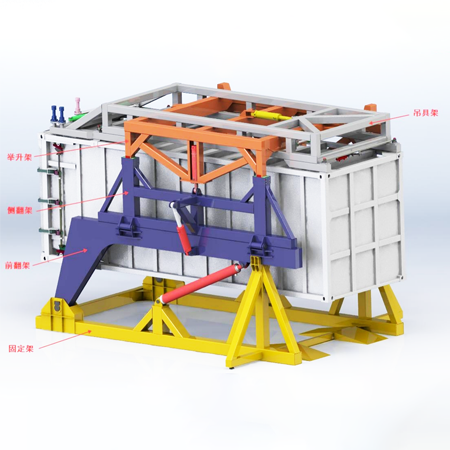
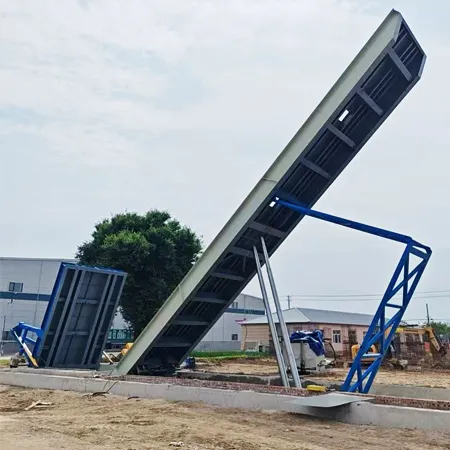
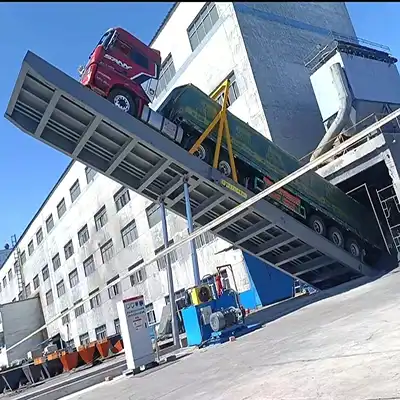
A hydraulic container tilter lifts and tilts a shipping container to a selected angle, allowing bulk materials to discharge under gravity. Depending on the material characteristics and equipment configuration, this process can help reduce unnecessary material handling and provide better control over the unloading operation.
Reduced Exposure During Transportation
When dry bulk materials are transported inside a properly closed shipping container, they are less exposed to wind and external environmental conditions than materials carried in open truck beds or other uncovered transport systems.
This can help reduce windblown dust during transportation, provided the container is suitable for the material and its doors, seals, and other openings are properly secured.
Using containers for bulk transport also allows materials to move through existing road, rail, and port logistics networks with less exposure to the surrounding environment.
Controlled Gravity-Based Unloading
Unlike systems that rely on uncontrolled dumping or repeated mechanical handling, a hydraulic container tilter can raise the container gradually and allow material to flow out under gravity.
The unloading angle and operating speed can be selected according to the material’s flow characteristics and the receiving system. With a properly designed installation, the discharge rate can be better controlled, reducing sudden material surges and excessive impact at the receiving point.
However, gravity unloading alone does not eliminate dust. Fine, dry, or easily aerated materials may still generate airborne particles, so the discharge opening and receiving equipment remain important parts of the dust-control design.
Dust-Control Connections at the Container Door
One of the most useful options is to connect a suitable enclosed chute, transfer duct, or other dust-control interface at the container discharge opening.
Instead of allowing material to discharge directly into the open air, the container tilter can be integrated with a receiving hopper, enclosed conveyor, extraction duct, or dust collection system.
Depending on the material and plant layout, this arrangement can help:
- Contain dust near the discharge point.
- Reduce material spillage and uncontrolled airborne emissions.
- Direct bulk material into the next stage of the conveying process.
- Improve housekeeping around unloading areas.
- Provide a practical connection point for centralized dust collection.
The exact arrangement depends on the container design, discharge geometry, material flow characteristics, and the required dust-control performance. A suitable seal or flexible connection may be needed to accommodate the movement of the container during tilting.
3. Supporting Cleaner Ports and Terminals
Ports and bulk terminals are under increasing pressure to reduce airborne emissions, protect workers, and minimize the environmental impact of material handling.
For facilities handling grain, fertilizers, minerals, coal, biomass, and other dry bulk materials, dust control must be considered across the entire process—from transportation and unloading to conveying, stockpiling, and loading.
A container tilter can contribute to this objective by providing a controlled unloading method and serving as part of an enclosed material handling system.
For example, a typical installation may combine:
- A shipping container transported with the bulk material enclosed.
- A hydraulic container tilter that raises the container to the required unloading angle.
- An enclosed discharge connection or receiving hopper.
- A belt conveyor that transfers the material to a stockpile, processing line, or loading point.
- A suitable dust extraction or collection system where required.
This integrated arrangement can reduce unnecessary material transfers and create opportunities to control dust at several critical points.
A container tilter is not a complete dust-control system by itself. For ports pursuing stringent environmental targets or zero-pollution objectives, its greatest value comes from integration with suitable enclosure, sealing, conveying, and dust collection technologies.
4. Container Tilter + Belt Conveyor: A Cost-Effective Dust-Control Solution
For many bulk material handling facilities, the challenge is not simply finding a machine that can unload a container. The real challenge is transferring material efficiently while limiting dust, spillage, and operating costs.
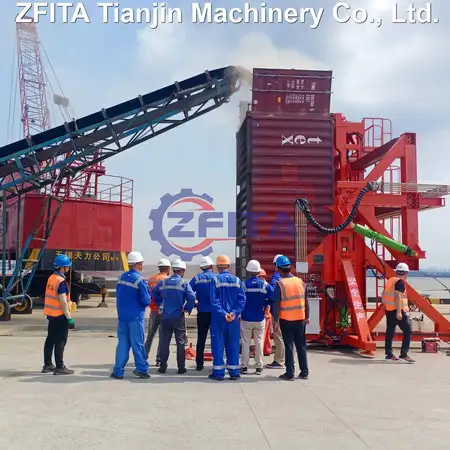
ZFITA specializes in integrating hydraulic container tilters with belt conveyor systems to create customized bulk unloading and material transfer solutions.
Depending on site requirements, the system can incorporate:
- Hydraulic container tilters for controlled gravity unloading.
- Enclosed chutes and receiving hoppers.
- Fixed or mobile belt conveyors for material transfer.
- Conveyor covers and transfer-point enclosures.
- Interfaces for dust extraction and collection equipment.
- Customized controls to coordinate container tilting and conveying.
Compared with replacing an entire material handling process with a complex new installation, integrating a container tilter into a suitable existing or new conveyor layout may offer a more economical path toward better dust control.
The actual investment depends on material properties, throughput, container size, site conditions, enclosure requirements, and environmental standards. Nevertheless, a properly engineered system can address practical dust-control needs while maintaining an efficient bulk handling operation.
For projects with limited space or budgets, a customized container tilting and conveying system can be an attractive alternative to more extensive infrastructure upgrades, where site conditions permit.
5. Can a Container Tilter Eliminate Dust Completely?
A container tilter can help reduce dust generation and contain emissions, but it cannot guarantee dust-free unloading on its own.
Performance depends on several factors:
- Material properties: Fine powders and very dry materials are generally more difficult to control than coarse granules.
- Discharge rate: Excessively rapid material flow can increase dust generation and overwhelm downstream equipment.
- Enclosure quality: Properly designed connections between the container, chute, hopper, and conveyor help prevent dust from escaping.
- Dust collection: Extraction and filtration may be necessary when handling highly dusty materials or meeting stringent emission limits.
- System integration: The unloading machine, receiving equipment, conveyors, and dust-control components must work together.
For this reason, dust-control requirements should be established during the equipment design stage rather than addressed only after installation.
Where ports or terminals must meet specific air-emission limits, the proposed system should be evaluated against the applicable environmental requirements, with testing or monitoring where necessary.
6. ZFITA: Integrating Container Tilting and Bulk Conveying Systems
ZFITA provides hydraulic container tilters and customized bulk material handling equipment for industrial applications worldwide.
Our strength is not limited to manufacturing individual machines. We focus on integrating container tilting systems with belt conveyor transportation systems to support complete bulk unloading, conveying, stockpiling, and loading operations.
For customers concerned about dust emissions, ZFITA can develop a solution around the material characteristics, container specifications, required throughput, site layout, and available dust-control equipment.
The objective is to reduce unnecessary material handling, improve unloading control, and provide a practical foundation for cleaner bulk material operations.
For ports, terminals, recycling facilities, and industrial plants working toward stricter environmental standards, this approach can offer a cost-effective way to improve dust management without automatically requiring a complete replacement of the existing handling infrastructure.
Conclusion
Can a container tilter help reduce dust during bulk unloading? Yes—when it is designed as part of an appropriate dust-control and conveying system.
Keeping bulk materials enclosed during transportation, controlling the gravity discharge process, and connecting the container outlet to enclosed receiving equipment can help reduce dust generation and limit its release into the surrounding environment.
As ports and terminals work toward cleaner operations and increasingly demanding pollution-control targets, hydraulic container tilters combined with suitable belt conveyors and dust collection equipment can provide a practical, economical approach to more sustainable bulk material handling.
Contact ZFITA to discuss a customized container tilting and belt conveyor solution for your bulk material unloading project.