General introduction
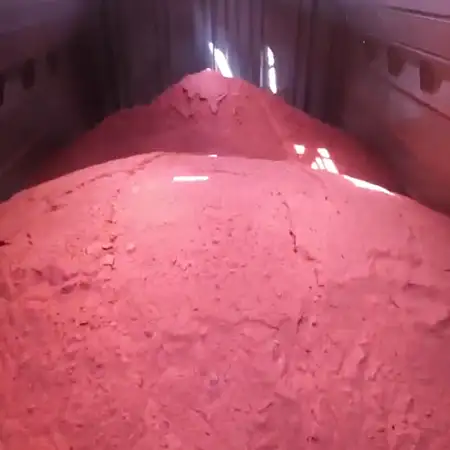
Unloading a shipping container filled with bulk material can be difficult when the cargo is heavy, dusty, compacted, or difficult to access. Traditional unloading methods may require forklifts, loaders, cranes, manual handling, or additional conveyors, increasing handling time, labor requirements, and operational complexity.
For many bulk materials, a container tilter provides a more direct solution. By hydraulically tilting the entire container, the equipment uses gravity to move the material toward the discharge point, allowing the container to be emptied without manually removing the bulk cargo.
The best unloading method depends on the material, container size, site layout, and—most importantly—how the container will be loaded onto the tilter.
Why Use a Container Tilter for Bulk Material Unloading?
Bulk materials such as fertilizer, potash, phosphate, sulphur, bauxite powder, alumina, grain, and other mineral products can be difficult to remove from a horizontal shipping container.
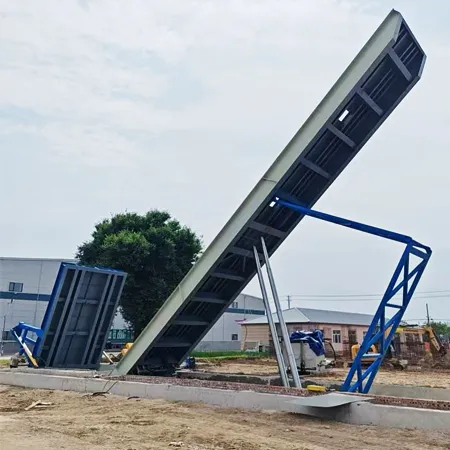
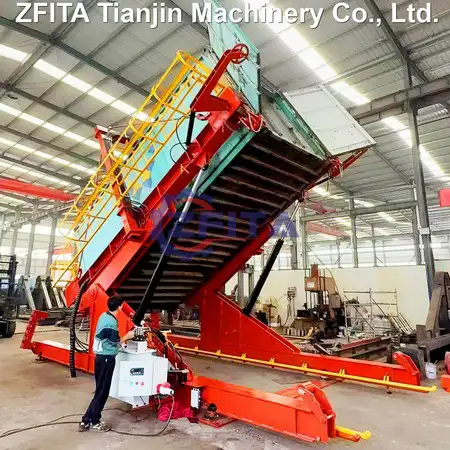
A container tilter changes the unloading process by rotating the container from its horizontal transport position toward a vertical or near-vertical position. With a controlled hydraulic tipping motion, the bulk material can flow out of the container under gravity.
This approach can reduce the need for operators or mobile equipment to enter the container during unloading.
ZFITA container tilters are designed for heavy-duty bulk material handling and can tilt ISO containers through a controlled 0–90° hydraulic tipping cycle. Both product series use synchronized hydraulic cylinders to provide stable movement during the tipping operation.
Two Ways to Handle the Container
There is no single container unloading system that fits every site.
The key question is:
How do you want to move the container onto and off the tilter?
ZFITA offers two container tilter configurations to address different site conditions.
1. Container Tilter Working Directly With a Truck
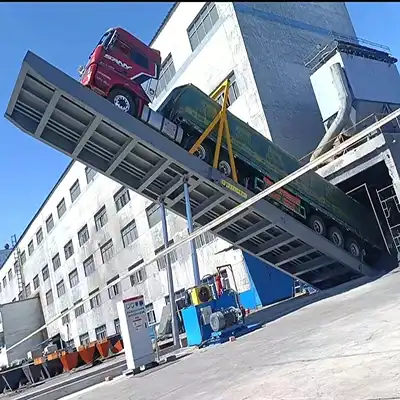
If the container normally arrives and leaves on a container truck, the ZCT-ATT20 Container Tilter allows the truck to position the container directly onto the equipment.
This configuration is designed to minimize additional container-handling machinery. The truck positions the container on the tilter, the container is secured, and the hydraulic system performs the tipping operation.
The ZCT-ATT20 is rated for 40,000 kg SWL and is designed for 20-foot ISO containers. Its hydraulic tipping angle is 0–90°, with a tipping speed of approximately 2°/s.
This configuration can be particularly useful when:
- Containers arrive directly by truck
- No reach stacker is available
- The site wants to minimize additional mobile handling equipment
- Bulk material needs to be discharged directly into a receiving area
- Heavy-duty operation is required
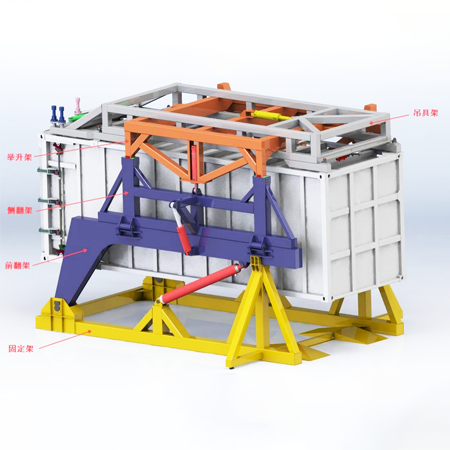
The ATT20 also incorporates synchronized hydraulic cylinders, an industrial-grade hydraulic system, multiple operating modes, and an optional weighing system. Its side access platform provides a controlled location for operators to inspect the container and handle the hatch before lowering the container.
2. Container Tilter Working With a Reach Stacker or Forklift
Some bulk handling facilities already have a reach stacker, forklift, or overhead crane for container handling.
In this situation, the ZCT-AZM/CC20 Container Tilter provides a different configuration.
Instead of requiring the truck to position the container directly onto the tilter, the container can be handled onto and off the equipment by a reach stacker or forklift. This allows the tilter to operate as part of an existing container-handling workflow.
The ZCT-AZM/CC20 is designed for 20-foot ISO containers with a rated load capacity of 30,000 kg SWL. It uses synchronized hydraulic tipping and provides a 0–90° tipping range. The standard configuration uses a diesel power unit and hydraulic linkage locking to secure the container during operation.
This configuration can be suitable when:
- A reach stacker is already available
- Forklifts are part of the site’s normal container-handling process
- Containers need to be moved independently of truck arrival
- The unloading station is located away from the truck receiving area
- The operator wants greater flexibility in container positioning
Which Container Tilter Configuration Do You Need?
The basic selection principle is simple:
| Site Condition | Recommended Configuration |
|---|---|
| Container arrives directly by truck | ZCT-ATT20 |
| No reach stacker available | ZCT-ATT20 |
| Truck can position the container directly on the tilter | ZCT-ATT20 |
| Reach stacker is available | ZCT-AZM/CC20 |
| Forklift is available for container handling | ZCT-AZM/CC20 |
| Containers need to be handled independently from trucks | ZCT-AZM/CC20 |
| Heavy-duty bulk material unloading | Both configurations, depending on handling method |
The equipment selection should therefore start with the container handling process, rather than simply selecting a tipping capacity.
How Does a Container Tilter Unload Bulk Material?
The unloading process is straightforward.
First, the container is positioned and locked onto the tilter. The hydraulic system then raises and rotates the container toward the required discharge angle.
As the container approaches the tipping position, gravity causes the bulk material to move toward the container opening and discharge into the receiving system.
After unloading, the container is returned to the horizontal position and released for the next handling cycle.
For materials that require controlled unloading, the hydraulic system allows the operator to manage the tipping movement rather than relying on uncontrolled mechanical movement.
ZFITA’s two container tilter configurations use synchronized hydraulic cylinders and safety interlocks designed to prevent tipping when the container is not properly secured.
What Bulk Materials Can Be Unloaded With a Container Tilter?
Container tilters are particularly useful for loose bulk solids that can flow or discharge when the container is inclined.
Typical applications include:
- Potash and phosphate fertilizers
- Other fertilizer-grade bulk materials
- Sulphur
- Loose chemical commodities
- Bauxite powder
- Alumina powder
- Mineral bulk solids
- Heavy scrap and recyclable materials
ZFITA specifically designs its heavy-duty container tilters for these types of bulk handling applications, including extreme payload conditions in metal recycling facilities.
For cohesive, wet, or difficult-to-flow materials, the unloading process should be evaluated according to the material’s physical properties and the required discharge system.
Container Tilter vs. Conventional Container Unloading
A conventional unloading operation may require the container to be opened and the material removed using forklifts, loaders, grabs, conveyors, vacuum systems, or manual labor.
A container tilter takes a different approach: move the container instead of moving the material piece by piece.
This can offer several operational advantages:
Faster bulk discharge
The entire container can be tipped toward the receiving point instead of relying entirely on equipment entering the container.
Reduced manual handling
The operator can control the tipping process remotely or from the local control system.
Less dependence on additional equipment
The truck-direct configuration can eliminate the need for a reach stacker or crane for container placement.
Better integration with existing handling systems
The reach-stacker/forklift configuration can be integrated into facilities that already have container-handling equipment.
Heavy-duty construction
ZFITA uses Q355B structural material for the main equipment frame, while the product design incorporates heavy-duty components for demanding operating environments.
Choosing the Right Container Unloading System
Before selecting a container tilter, consider these questions:
1. How does the container arrive?
If the container arrives directly on a truck and you want the truck to place it onto the tilter, the truck-direct configuration is the logical starting point.
If containers are already handled by reach stackers or forklifts, a machine-loading configuration may provide greater flexibility.
2. What material are you unloading?
Fertilizer, potash, sulphur, mineral powders, grain, and scrap metal can have very different flow characteristics.
The material’s density, particle size, moisture content, abrasiveness, and tendency to compact should all be considered when designing the unloading process.
3. What happens after the material leaves the container?
The tilter is only one part of the material-handling system.
The discharge point may connect to a hopper, conveyor, stockpile, processing line, truck loading system, or other downstream equipment.
A complete unloading solution should therefore consider the entire material flow—from container arrival to final transfer.
4. What is the required capacity?
Container payload and equipment working load must be considered together.
For example, the ZCT-ATT20 has a rated load capacity of 40,000 kg, while the ZCT-AZM/CC20 has a rated load capacity of 30,000 kg. The appropriate model depends on the actual container payload and operating requirements.
A Container Tilter Is More Than a Tipping Machine
For bulk material operations, the objective is not simply to turn a container over.
A practical container unloading system needs to address container handling, locking, hydraulic movement, operator safety, material discharge, and downstream material transfer as one process.
That is why ZFITA offers different container tilter configurations rather than a single standard machine.
The ZCT-ATT20 is designed around truck-direct container handling, while the ZCT-AZM/CC20 is designed for sites where containers are handled by reach stackers or forklifts. Both use hydraulic tipping to provide controlled 0–90° container rotation for bulk material discharge.
If you are looking for the best way to unload bulk material from shipping containers, the right solution depends on your container handling method, bulk material characteristics, payload, site layout, and downstream process.
ZFITA can help evaluate these requirements and configure a container unloading system around the actual operating conditions.