Loading scrap metal into shipping containers presents challenges that differ from handling grain, fertilizer, or other free-flowing bulk materials.
Scrap steel often contains heavy, irregularly shaped pieces. Conventional horizontal loading can leave unused space inside the container, while uncontrolled loading or compaction may damage container walls and doors.
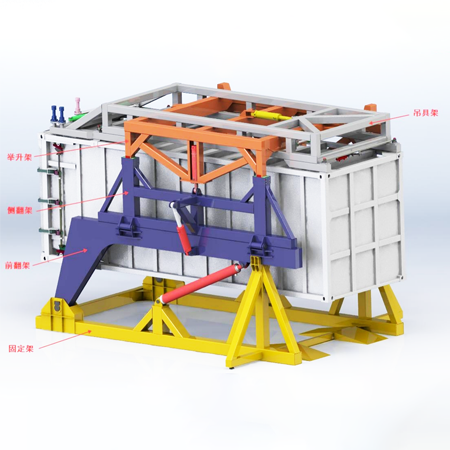
A container tilter for scrap metal loading changes the loading orientation by hydraulically raising a secured shipping container toward a vertical position. This allows suitable scrap to be introduced from above using an excavator, magnetic attachment, or another compatible loading device.
For scrap recycling companies and metal exporters, the main purchasing questions are not simply how far the equipment can tilt. They also involve container protection, loading weight, excavator access, operating safety, and the overall loading process.
Why Is Scrap Metal Difficult to Load into Shipping Containers?
Unlike uniform granular cargo, scrap metal may contain pieces of different sizes, shapes, and weights.
When loaded horizontally, these pieces can become unevenly distributed, creating voids inside the container.
Three practical problems commonly arise:
- Unused container space: Irregular scrap may not settle efficiently during conventional loading.
- Container damage: Sharp or heavy pieces can produce concentrated loads on sidewalls, floors, and doors.
- Weight control: The container may reach its allowable payload before its volume is fully utilized, or its volume may fill before the permitted payload is reached.
The objective is therefore not simply to fill every available space. It is to load material efficiently while respecting container structural limits, gross weight restrictions, and transport requirements.
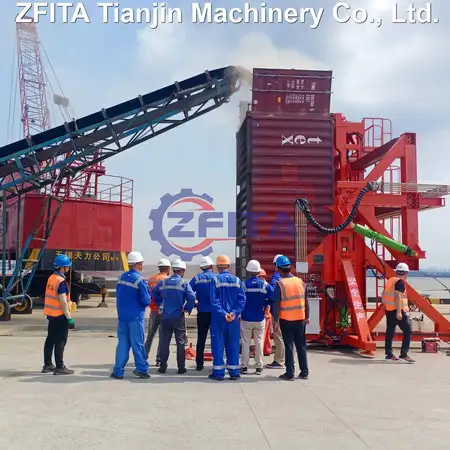
How Does a Container Tilter Load Scrap Metal Vertically?
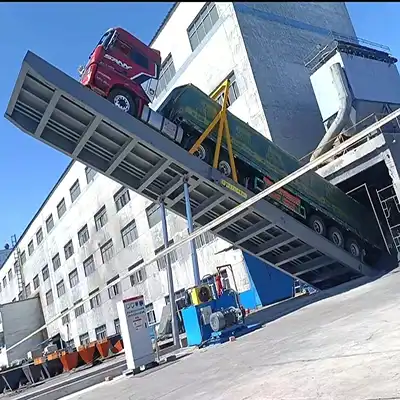
A hydraulic container tilter securely holds a shipping container while rotating it from its normal horizontal position to a selected working angle.
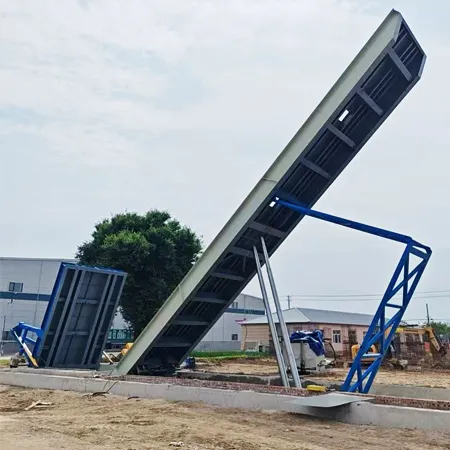
For suitable scrap loading applications, the container can be positioned close to vertical, allowing material to enter from above through the designated opening.
A typical workflow includes the following stages.
1. Container Positioning and Locking
An empty, compatible shipping container is positioned on the tilter and secured using the specified locking mechanism.
The container’s condition, locking points, operating clearance, and suitability for scrap loading must be checked.
2. Hydraulic Tilting
The hydraulic system moves the secured container toward the required loading angle.
Certain scrap loading configurations support a maximum tilting angle of 90°. The available angle must be confirmed for the selected equipment model.
3. Scrap Feeding
An excavator equipped with a suitable magnetic attachment can lift ferrous scrap and place it into the container from above.
Other scrap types may require different attachments or loading machinery.
4. Loading Weight Monitoring
An integrated weighing system, where provided, allows operators to monitor the loaded weight during the operation.
This helps control loading against the applicable container payload and transport restrictions.
5. Return to Transport Position
Once loading is complete, the approved door-closing and handling procedures are followed, and the container is returned to its horizontal position.
The loaded container can then be prepared for transport according to the operating procedure.
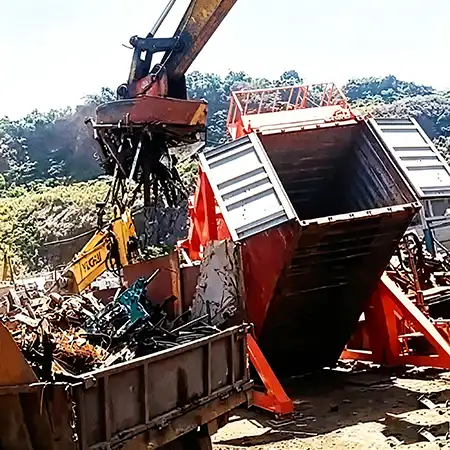
What Equipment Is Needed for Vertical Scrap Loading?
A container tilter is the central machine, but the complete loading operation may require additional handling and protection equipment.
| Equipment | Main Function | Selection Consideration |
|---|---|---|
| Hydraulic Container Tilter | Holds and tilts the container | Size, loaded weight, angle, operating layout |
| Excavator and Magnet | Handles suitable ferrous scrap | Scrap type, lifting capacity, working reach |
| Container Locking System | Retains the container during tilting | Locking compatibility and monitoring |
| Weighing System | Monitors loaded weight | Accuracy, integration, calibration |
| Container Protection Frame | Helps limit deformation during loading | Material, loading forces, protection locations |
| Door Control System | Supports controlled door operation | Container compatibility and operational sequence |
Not every project requires the same configuration.
For example, a facility already equipped with suitable scrap handling machinery may only need a container tilter and selected accessories. A new export loading station may require additional equipment and site engineering.
How Can Vertical Scrap Loading Improve Container Utilization?
The main advantage of vertical loading is the change in loading geometry.
When a container is positioned vertically, suitable scrap can settle downward under gravity rather than accumulating from one end of a horizontal container.
For irregular materials, this can help reduce large voids and improve the distribution of cargo.
However, better volume utilization does not automatically permit more cargo weight.
The final loaded weight must remain within applicable container, equipment, road and shipping limits. Material settlement also depends on scrap size, shape and loading method.
Buyers should assess both the achievable loading volume and the allowable payload rather than assuming every project will achieve the same improvement.
Why Is Container Protection Important for Scrap Metal Loading?
Heavy and irregular scrap can create concentrated forces against container panels.
During loading, sharp pieces may strike the container walls, while uneven accumulation may increase localized pressure.
For demanding scrap applications, a container tilter can be equipped with an external protection frame.
Depending on the equipment design, protection may be provided at the container sides, door end, top, or bottom.
These accessories are intended to help support the container structure and reduce deformation risk. They do not make a standard shipping container suitable for unlimited compaction or excessive loading forces.
Should Every Scrap Loading Project Use a Protection Frame?
Not necessarily.
The appropriate configuration depends on:
- Scrap dimensions, shape, and density.
- Loading method and impact conditions.
- Container type and structural condition.
- Expected operating frequency.
- Risk of localized deformation.
- Supplier engineering recommendations.
For detailed explanations of protection locations and configurations, read Container Tilter Protection Frame: Anti-Bulge Solutions for Scrap Steel.
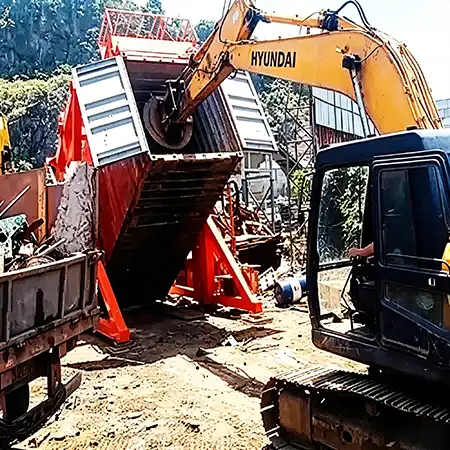
Real Application: ZFITA Scrap Metal Loading Project
ZFITA supplied a ZCT-TT20 hydraulic container tilter for the Hangzhou Jianfa Metal Scrap Recycling project.
The customer needed to load heavy, irregular scrap into 20ft shipping containers while improving use of the available internal space and controlling loaded weight.
The equipment was configured for vertical scrap loading.
Project Configuration
| Parameter | Project Details |
|---|---|
| Customer | Hangzhou Jianfa Metal Scrap Recycling |
| Equipment | ZCT-TT20 Container Tilter |
| Container | 20ft shipping container |
| Material | Heavy, irregular metal scrap |
| Maximum Tilting Angle | 90° |
| Loading Equipment | Excavator with magnetic attachment |
| Weight Monitoring | Integrated real-time weighing |
| Additional Functions | Hydraulic locking, door control, container protection |
The container tilter allowed the shipping container to be positioned vertically for loading with a magnetic excavator.
The real-time weighing system provided operators with loading-weight information, while the hydraulic handling and protection features supported the project’s operating requirements.
The project illustrates how a container tilter can be configured for a specific material rather than treated as a universal loading machine.
Read the complete project: Hangzhou Jianfa Metal Scrap Recycling — ZCT-TT20 Container Tilter.
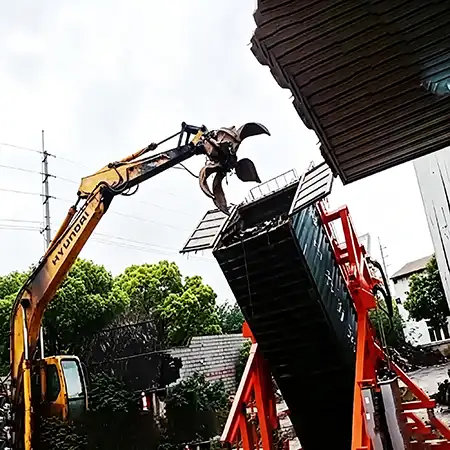
How to Choose a Container Tilter for Scrap Metal Loading
For buyers planning a recycling or export operation, the following factors should be confirmed before requesting equipment quotations.
Container Size and Maximum Weight
Determine whether the project uses 20ft, 40ft, or another compatible container configuration.
Provide the maximum expected gross container weight and confirm the container’s allowable payload.
The rated load of the tilter must be compatible with the proposed operating conditions.
Scrap Characteristics
Identify the material type and provide representative photographs.
Important information includes piece size, bulk density, shape, abrasiveness, and whether the scrap can be handled by an electromagnetic attachment.
Mixed or non-ferrous scrap may require a different feeding method.
Loading Angle and Equipment Geometry
The required tilt angle depends on how scrap enters and settles inside the container.
Buyers should also verify excavator reach, loading clearance, container access, and the available working space.
Weighing and Load Control
Where loading weight varies significantly, an integrated weighing function may help operators monitor material weight during loading.
Confirm the weighing system’s measurement range, accuracy, calibration requirements, and operating arrangement.
Container Protection and Safety
Review the proposed locking system, container support arrangement, protection frame, emergency controls, and operating procedures.
The supplier should explain how the system addresses the particular risks associated with heavy scrap handling.
Site Layout and Installation
Provide a site layout showing container positioning, excavator access, power supply, available ground space, and container removal arrangements.
A technically suitable machine may still require changes to the operating layout before it can be used effectively.
What Should You Send to a Container Tilter Supplier?
To obtain a project-specific proposal, prepare the following information:
| Buyer Information | Details Required |
|---|---|
| Scrap Material | Ferrous or non-ferrous, dimensions, photographs |
| Container | 20ft / 40ft, type and condition |
| Load | Expected cargo weight and maximum gross weight |
| Loading Equipment | Excavator, magnet, grab, or other attachment |
| Performance | Containers per shift or per day |
| Working Area | Site dimensions, ground conditions, access |
| Power Supply | Available voltage and electrical infrastructure |
| Optional Functions | Weighing, hydraulic locking, door control, protection frame |
A quotation should identify the proposed machine configuration, included accessories, technical drawings, installation requirements, and supply exclusions.
For available models, visit the ZFITA Container Tilter Product Range.
Frequently Asked Questions
Can a container tilter load scrap metal into a 20ft container?
Yes. Suitable hydraulic container tilters can be configured for vertical loading of scrap into 20ft shipping containers. Equipment selection depends on cargo characteristics and allowable loaded weight.
Is a 90-degree tilting angle necessary?
A near-vertical position may be useful for certain scrap loading processes, but the required angle depends on material behavior, loading equipment and container access. Not every application requires the same angle.
Can an excavator with a magnet load all types of scrap?
No. Magnetic attachments are suitable for compatible ferrous materials. Non-ferrous or mixed materials may require other handling attachments.
Does vertical loading guarantee maximum container capacity?
No. Vertical loading may improve material distribution and reduce unused space, but actual loading is limited by weight restrictions, container structure, material characteristics and the operating process.
Is an anti-bulge protection frame standard equipment?
Protection frames are configuration-dependent. Buyers should confirm whether the proposed equipment includes sidewall or end protection and whether these features are appropriate for the material.
Can a container tilter also unload scrap metal?
Certain equipment configurations can support loading and unloading, but the required handling arrangement must be reviewed separately. The loading and unloading of irregular scrap may involve different machinery and safety procedures.
Conclusion
A container tilter can provide an effective loading method for scrap metal exporters and recycling operations where irregular material shapes make conventional horizontal loading difficult.
The most important benefits come from matching the tilting arrangement to the material and combining it with appropriate loading machinery, weight monitoring and container protection.
For buyers, the correct equipment selection depends on more than tilt angle or nominal capacity. Scrap characteristics, container limits, site conditions and handling methods should all be evaluated before ordering.
Explore ZFITA Container Tilter Equipment or review the Hangzhou Jianfa Scrap Loading Project for an example of an application-specific configuration.