Handling heavy, abrasive, and high-volume minerals in demanding environments.
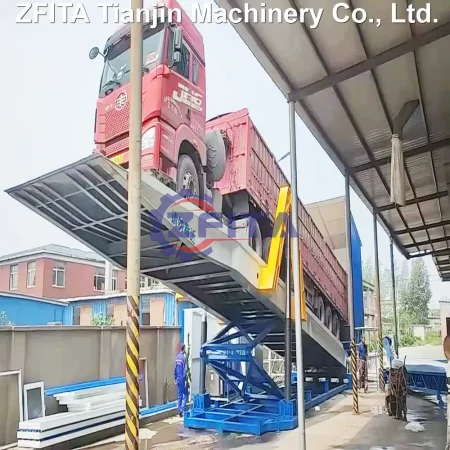
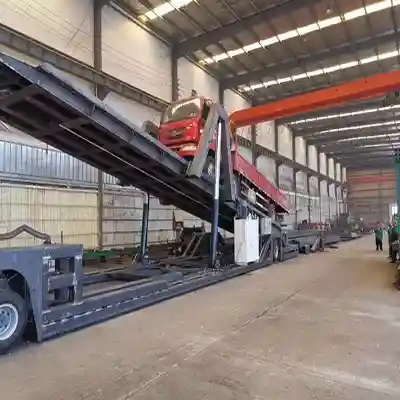
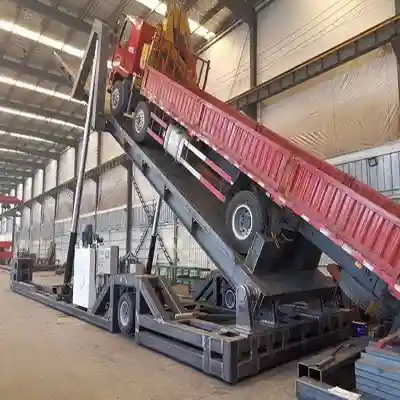
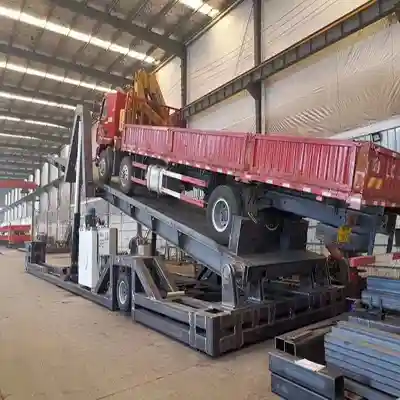
ZFITA supplies mobile hydraulic truck dumpers and portable truck tipping platforms for unloading dry bulk materials from trucks and semi-trailers.
Unlike stationary truck dumpers installed at permanent unloading stations, mobile truck dumpers are designed for relocation between suitable operating sites.
Our portable truck dumper solutions can be configured with hydraulic lifting platforms, vehicle restraint systems, relocatable supporting structures and connections to downstream bulk receiving equipment.
Depending on project requirements, ZFITA can review towable portable and lift-relocated semi-portable configurations for temporary unloading stations, seasonal operations, leased terminals and industrial bulk handling yards.
Equipment dimensions, rated load capacity, tipping angle and relocation method are determined according to the selected design.
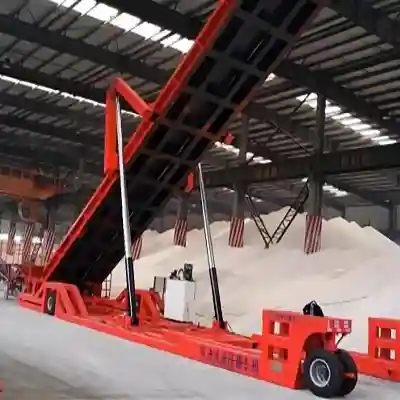
The main difference between mobile truck dumper configurations is how frequently the equipment must be relocated and how it is transported between operating sites.
A portable hydraulic truck dumper is designed for projects that require equipment relocation between unloading locations.
A project-specific portable configuration may incorporate a transportable supporting structure, suitable relocation attachments and hydraulic lifting equipment.
The transportation arrangement must be designed around the complete machine weight, dimensions and local road or site requirements.
Main Features
Suitable for: Temporary industrial unloading stations, seasonal agricultural operations and projects requiring equipment transfer between different locations.
A semi-portable truck dumper is intended for facilities that occasionally need to relocate their unloading equipment.
The machine can be designed with a relocatable support frame that allows disassembly, lifting or transportation using appropriate external equipment.
Compared with a purpose-built towable unit, a semi-portable configuration may require more preparation and lifting equipment during relocation.
Main Features
Suitable for: Leased industrial yards, semi-permanent projects, changing production sites and facilities expecting occasional relocation.
| Specification | Portable | Semi-Portable |
| Main Application | Relocatable unloading stations | Occasional relocation |
| Mobility Method | Project-specific towable arrangement | External lifting or transport |
| Hydraulic Tipping | Yes | Yes |
| Permanent Installation | Not normally intended | Not normally intended |
| Equipment Disassembly | Depends on design | May be required |
| Vehicle Restraint | Required | Required |
| Ground Preparation | Required according to design | Required according to design |
| Receiving System | Project-specific | Project-specific |
| Rated Load Capacity | Customized | Customized |
| Platform Dimensions | Customized | Customized |
These configurations represent available engineering approaches. Final ZFITA models, transportation arrangements and specifications must be confirmed before quotation.
The following table identifies the main parameters used to configure a mobile truck tipping system.
| Technical Parameter | Available Configuration |
|---|---|
| Equipment Type | Mobile / Semi-Portable Hydraulic Truck Dumper |
| Main Application | Bulk Truck and Trailer Unloading |
| Rated Load Capacity | According to Project Requirements |
| Platform Length | Customized to Vehicle Dimensions |
| Platform Width | Customized |
| Maximum Tipping Angle | According to Material and Equipment Design |
| Hydraulic Lifting System | Project-Specific |
| Mobility Arrangement | Towable / Lift-Relocated |
| Power Unit | Electric / Diesel Options Subject to Design |
| Vehicle Restraint | Wheel Stops and Specified Restraint System |
| Operating Controls | Local Hydraulic / Electrical Controls |
| Receiving Equipment | Hopper / Pit / Conveyor Interface |
| Installation | Engineered Ground Support |
| Optional Equipment | Weighing, Dust Control, Safety Guards |
Important: Stationary truck dumper specifications such as 100T, 120T or 150T capacity and 17 × 3 m platform dimensions must not automatically be applied to a mobile configuration.
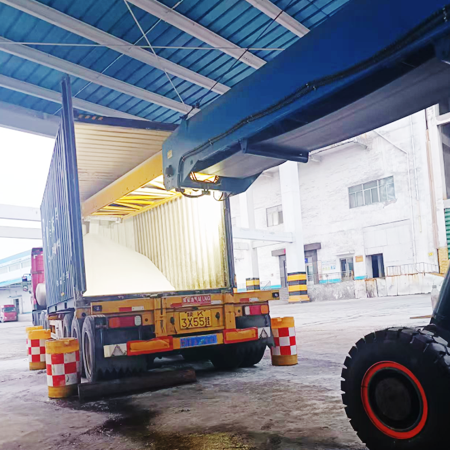
The mobile truck dumper is transported to the designated unloading location.
Before operation, the supporting structure is positioned and secured according to the equipment’s installation requirements.
The operator verifies that the ground, supporting pads or engineered foundations meet the required bearing capacity and levelness.
The receiving hopper or discharge area must be ready to accept the material.
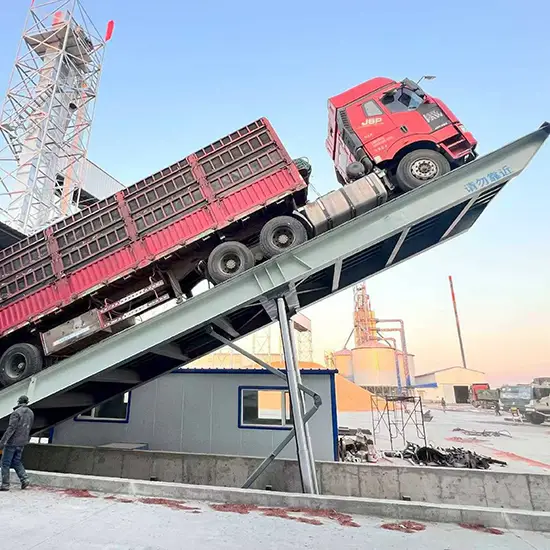
The loaded truck or semi-trailer enters the hydraulic tipping platform.
Wheel stops, vehicle restraints and applicable safety devices are engaged before lifting.
The hydraulic system raises the platform to the specified operating angle.
Bulk materials discharge from the vehicle into the receiving hopper, pit or other designated collection system.
After unloading, the hydraulic platform returns to its horizontal position.
The vehicle is released only after the required safety conditions are satisfied.
After the unloading operation is completed and the equipment is prepared for transport, the truck dumper can be relocated using its specified transportation procedure.
The primary advantage of a mobile truck dumper is the ability to relocate equipment between suitable operating locations.
This makes it an alternative to installing separate permanent unloading platforms at multiple sites.
The hydraulic lifting system raises the truck or trailer under controlled conditions, allowing compatible dry bulk materials to discharge by gravity.
The required lifting capacity, tipping angle and hydraulic power depend on the vehicle and material specifications.
The platform can be designed according to truck length, wheelbase, gross vehicle weight and axle configuration.
These dimensions must be established before selecting the hydraulic and structural arrangements.
A mobile truck dumper requires suitable vehicle restraint, operating controls and safety provisions.
Project-specific features can include mechanical or hydraulic wheel stops, emergency stops, hydraulic safety devices and operating interlocks.
Electric or diesel-powered hydraulic units can be considered according to the site.
The appropriate power system depends on operating requirements, local utilities and applicable safety conditions.
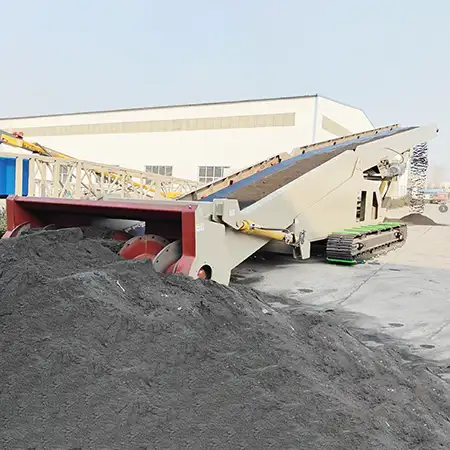
Mobile truck dumpers can be paired with suitable receiving hoppers, conveyors and downstream material handling systems.
The receiving system may be independently movable or installed at a designated unloading location.
Mobile truck dumpers can be considered for seasonal grain collection and agricultural receiving operations where unloading locations change.
Important considerations include truck traffic, material cleanliness, dust generation and receiving capacity.
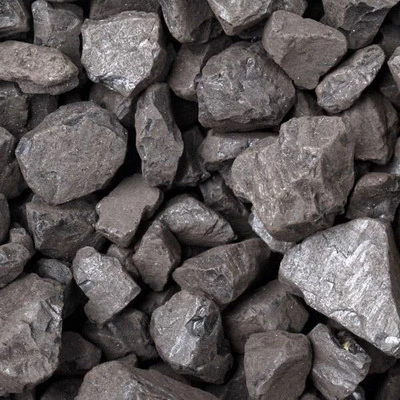
Portable unloading equipment can serve selected mineral-handling operations that require relocation between industrial sites.
Equipment design must account for vehicle weight, material density, abrasion and ground conditions.
Mobile hydraulic truck tippers may be used with suitable dry fertilizer and chemical materials.
Corrosion resistance, dust management and material compatibility should be evaluated during design.
Wood chips, agricultural residues and selected recyclable materials can be handled where the material and vehicle discharge arrangement are compatible.
The receiving opening and downstream conveying system must be designed to minimize bridging and blockage.
Temporary or leased logistics yards may benefit from equipment that can be relocated instead of permanently installed.
The economic suitability depends on project duration, relocation frequency, civil works and operating capacity.
| Selection Factor | Mobile Truck Dumper | Stationary Truck Dumper |
| Equipment Location | Relocatable | Permanent Operating Station |
| Relocation | Designed into Equipment | Not Normally Intended |
| Foundation | Engineered Temporary Support or Site Preparation | Permanent Foundation |
| Truck Access | Depends on Mobile Configuration | Deep/Shallow, Drive-Through/Back-On |
| Receiving System | May Be Relocatable | Often Permanently Integrated |
| Operating Frequency | Depends on Project | Suitable for Dedicated Permanent Operations |
| Main Selection Factor | Site Flexibility | Fixed-Station Integration |
| Capacity | Model-Specific | ZFITA Listed Models Include 100–150T |
A mobile unit does not automatically offer lower total cost or higher unloading capacity.
Equipment selection should consider relocation expenses, civil works, maintenance, site preparation and the expected operating life of the project.
Provide the total vehicle length, wheelbase, axle arrangement and maximum gross operating weight.
These determine the required platform length, structural design and hydraulic capacity.
Material type, bulk density, moisture content and flowability affect discharge performance and tipping requirements.
Confirm whether equipment will be relocated daily, seasonally or only when projects change.
Frequent relocation may justify a dedicated portable transport structure, while occasional relocation may be handled by a semi-portable design.
Provide information about the operating surface, ground bearing capacity, slope and available support area.
Portable equipment still requires suitable engineered ground conditions.
Determine whether material will discharge into a pit, mobile hopper, conveyor or existing process equipment.
The discharge opening and receiving capacity must match the expected unloading process.
Specify the available electrical supply or whether diesel-powered hydraulic equipment is required.
Also identify any special environmental or operating safety requirements.
ZFITA supplies hydraulic truck dumping equipment for industrial bulk material unloading projects.
Our equipment engineering and manufacturing scope includes structural steel fabrication, hydraulic system integration, mechanical assembly, electrical control integration and equipment testing.
For mobile truck dumper projects, ZFITA can review the required vehicle dimensions, operating weight, tipping arrangement, equipment relocation method, ground conditions and receiving system interface.
Project-specific technical drawings and final equipment specifications are established according to the agreed supply scope.
A mobile truck dumper is a hydraulic truck tipping machine designed to be relocated between suitable operating locations rather than remaining permanently installed at one station.
Portable models are configured for relocation using a designated transportation arrangement. Semi-portable models may require lifting, disassembly or external transportation equipment.
Not necessarily. Mobile means the equipment can be relocated. It does not automatically mean the machine is self-propelled.
Yes, when the platform dimensions, rated capacity, vehicle restraints and operating arrangement are designed for the specific semi-trailer.
Not necessarily a permanent deep foundation, but suitable engineered ground support is still required. Ground bearing capacity and equipment stabilization must be verified.
The rated capacity depends on the selected machine design. The required gross vehicle weight and axle loads must be provided before selecting the equipment.
These materials may be suitable when the truck discharge arrangement, material characteristics and receiving equipment meet the project requirements.
Yes. The machine can be integrated with a suitable receiving hopper or other bulk material collection system.
Both power configurations can be evaluated according to the selected hydraulic system and project requirements.
Yes, subject to the specified transportation arrangement, machine dimensions, lifting requirements and applicable road or site restrictions.
ZFITA supplies mobile and semi-portable hydraulic truck dumpers for bulk material unloading.
To receive an equipment proposal, please provide:
ZFITA can review these details and recommend an appropriate mobile truck dumping configuration.

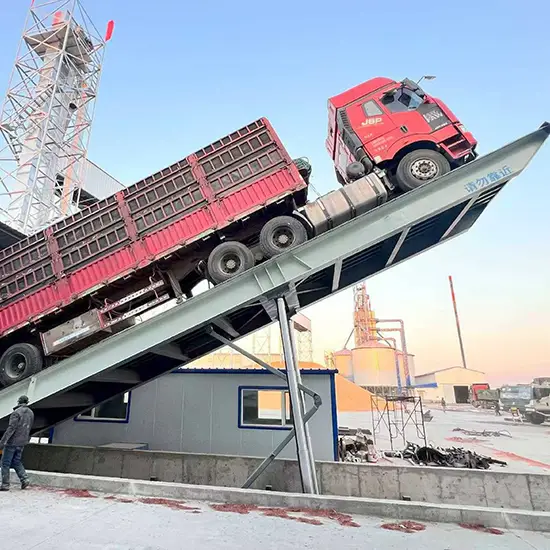
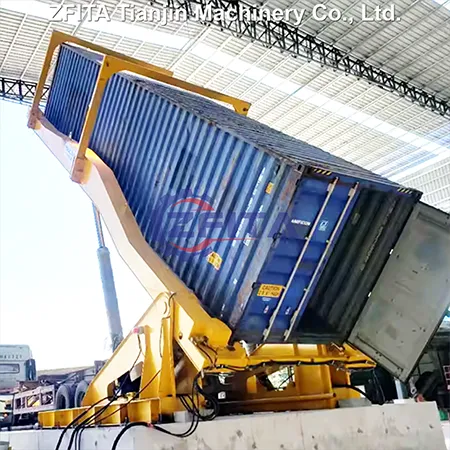
ZFITA manufactures 20ft, 40ft, and …
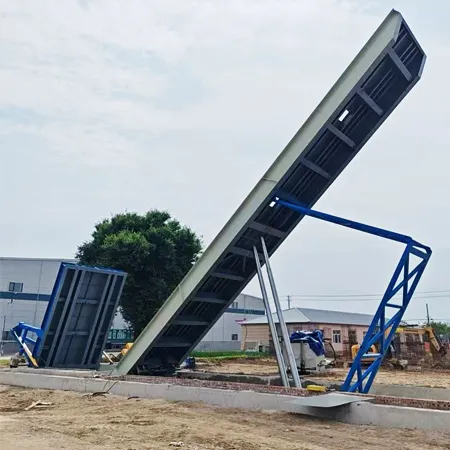
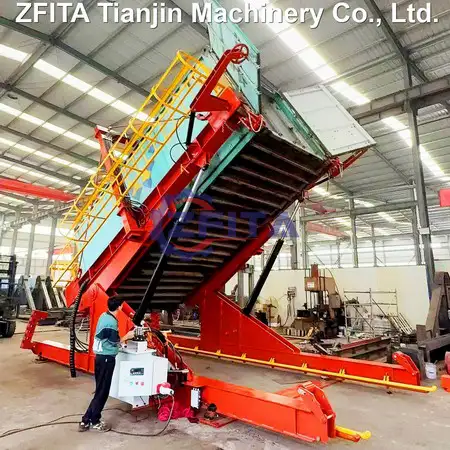
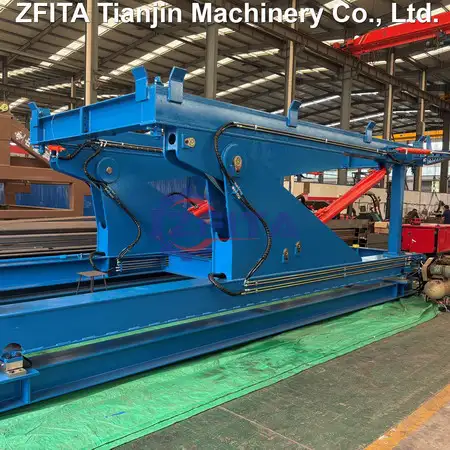
Handling heavy, abrasive, and high-volume minerals in demanding environments.
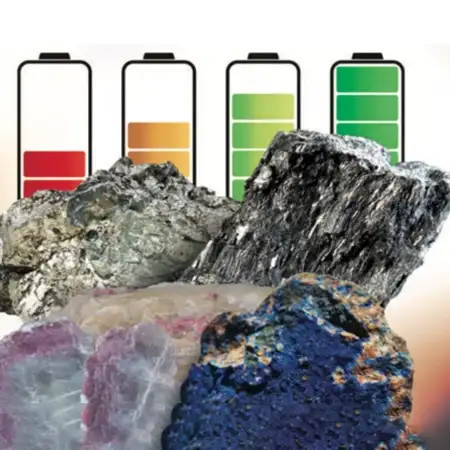
Handling critical minerals for battery production and energy storage applications.

Efficient handling of grains and agricultural commodities across the supply chain.